We took a walking tour through Lecee today. Chiara was our tour guide.
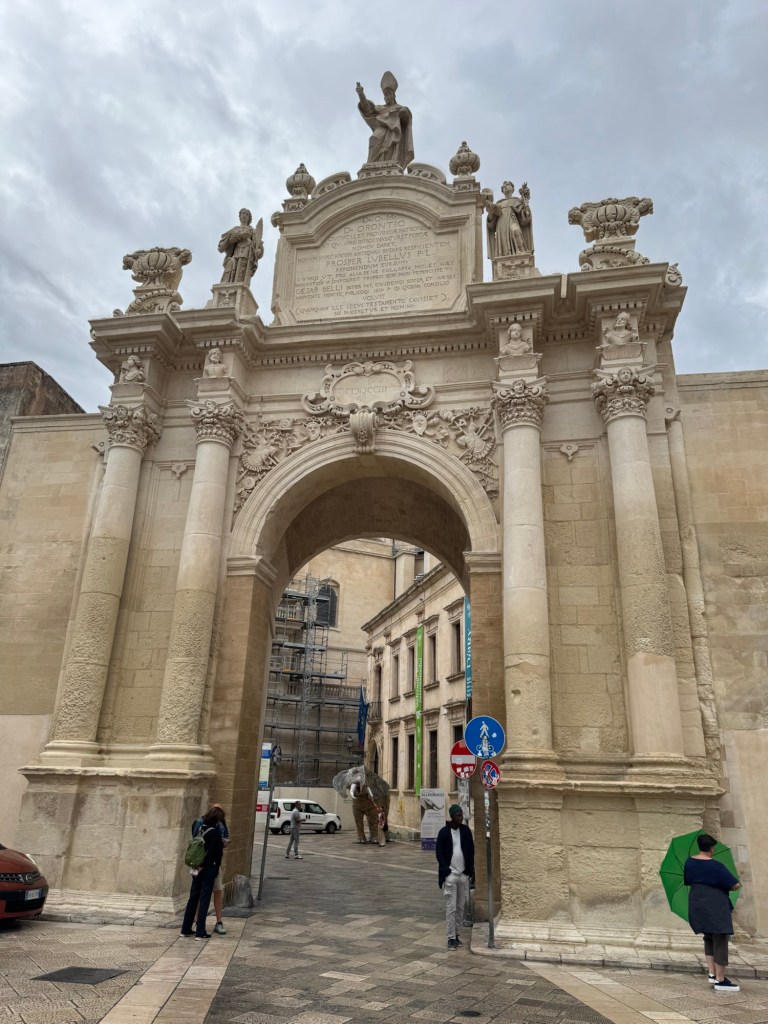
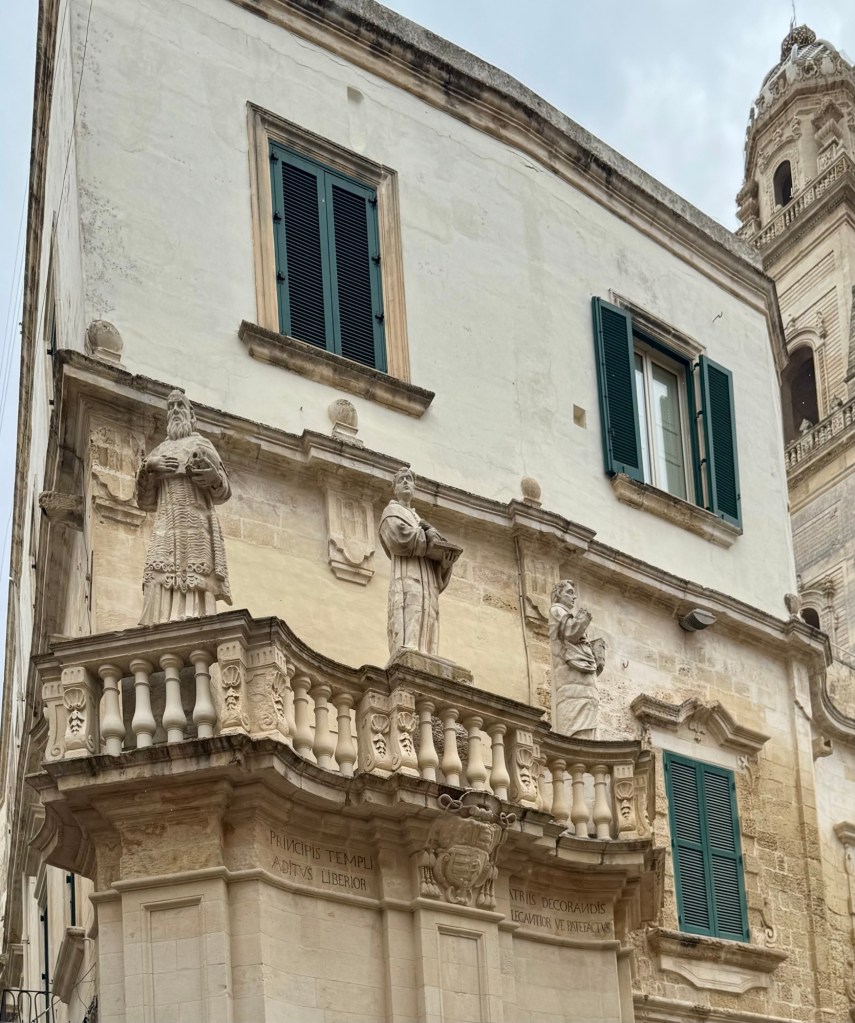
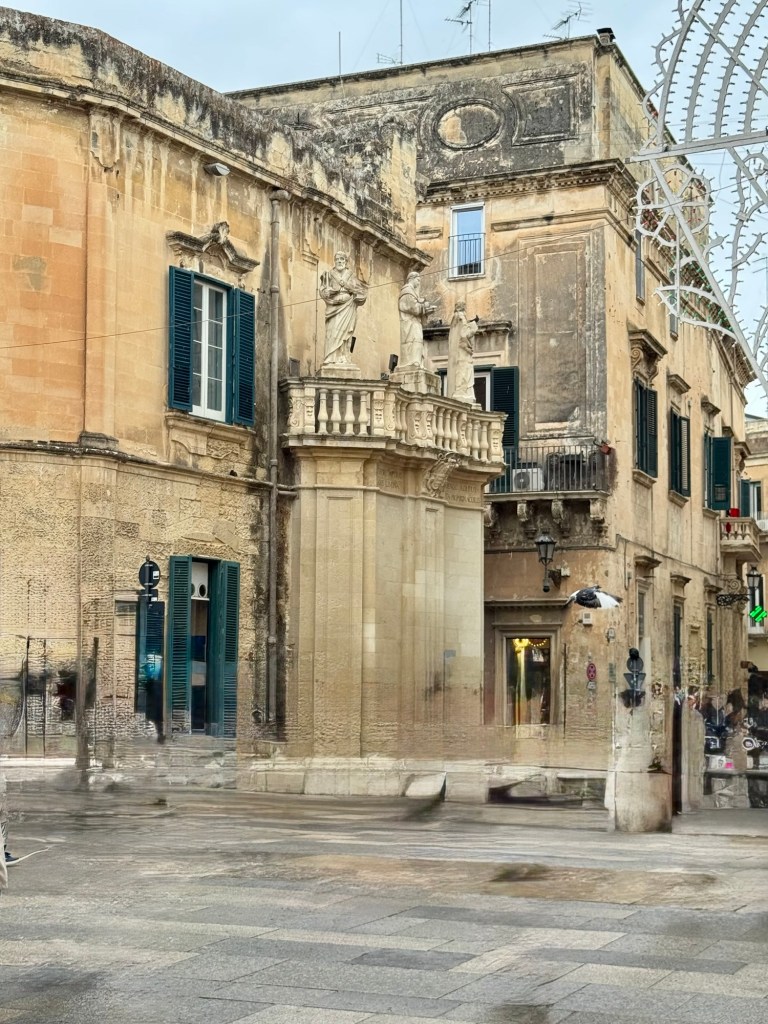
History: Rebuilt in 1703 after an older medieval gate collapsed. It was funded by the noble Prospero Lubelli.
Protecting Saints: Topped with statues of Saint Oronzo (the primary protector, also giving it the alternative name Sant’Oronzo), Saint Irene, and Saint Dominic.
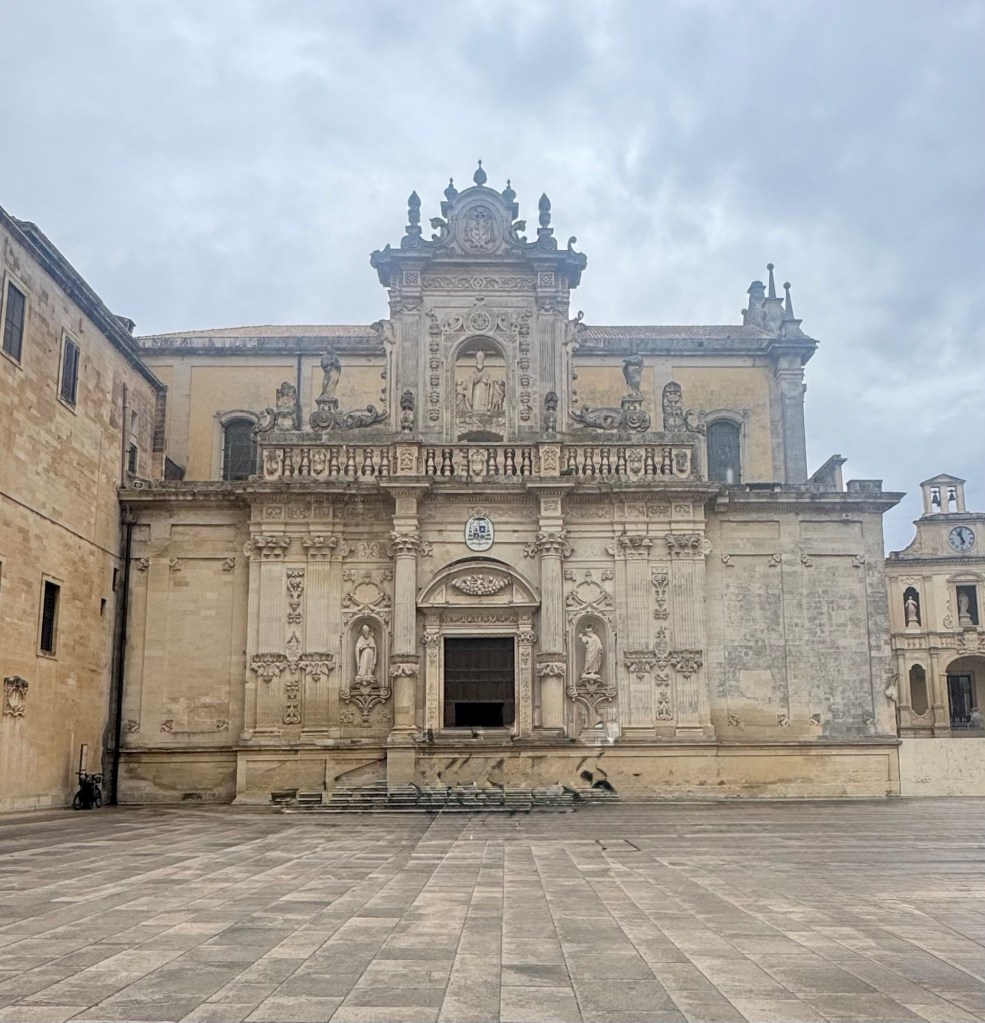
Piazza del Duomo is one of Lecce’s most important squares, a magnificent open-air ballroom defined by its unified Lecce Baroque architectural style. The space, which feels like a private world, is particularly magical at night when the golden stone of its buildings is fully illuminated. The square is home to the Duomo (Cathedral), the Campanile (bell tower), the Episcopio (Bishop’s Palace), and the Palazzo del Seminario.
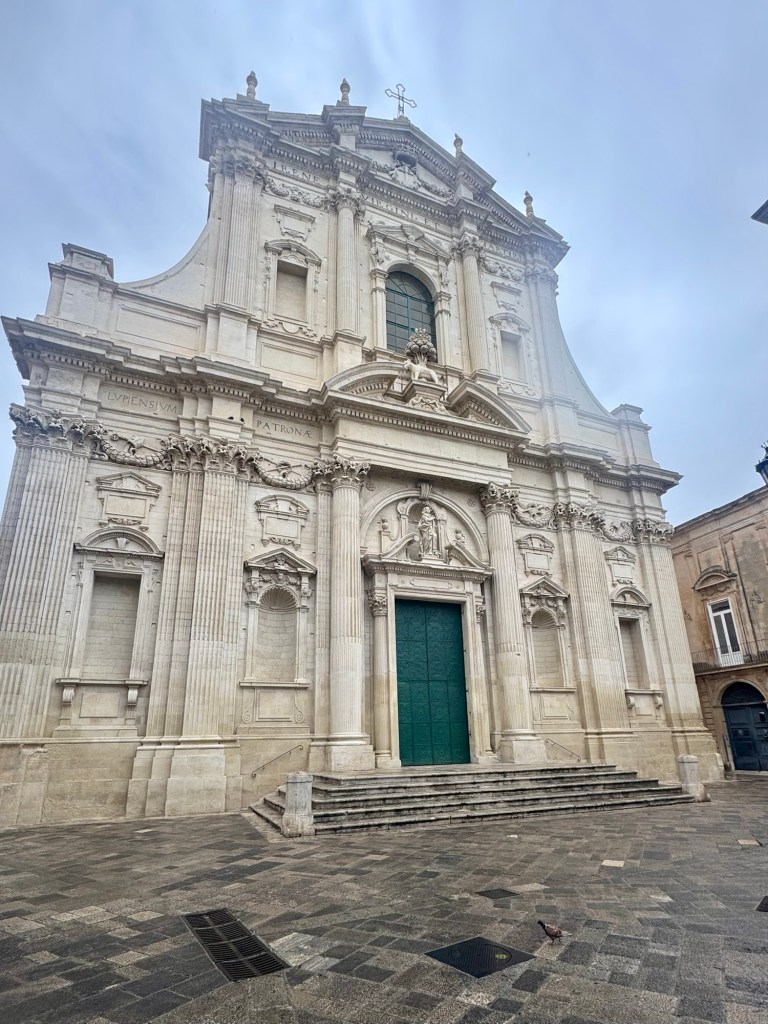
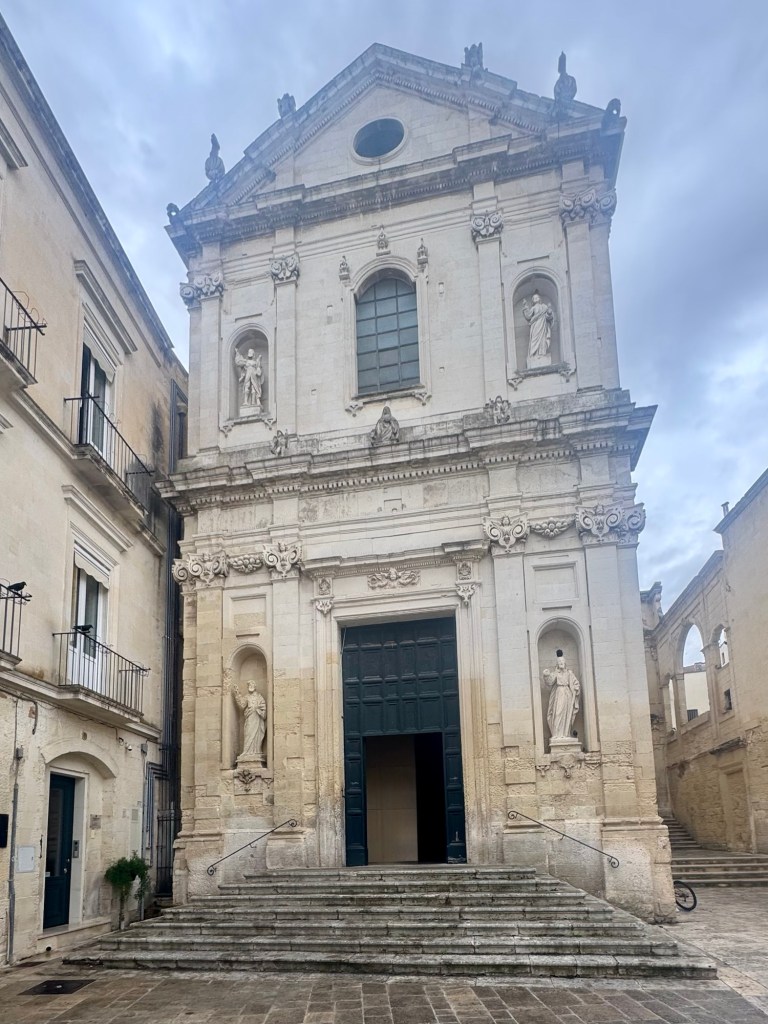
The Chiesa di Sant’Irene is a magnificent Baroque landmark located in the historic center of Lecce, just a short walk from Piazza Sant’Oronzo.
Early Patron: Dedicated to Saint Irene of Thessaloniki (Sant’Irene), she served as the primary patron saint of Lecce until 1656, when Saint Oronzo took her place.
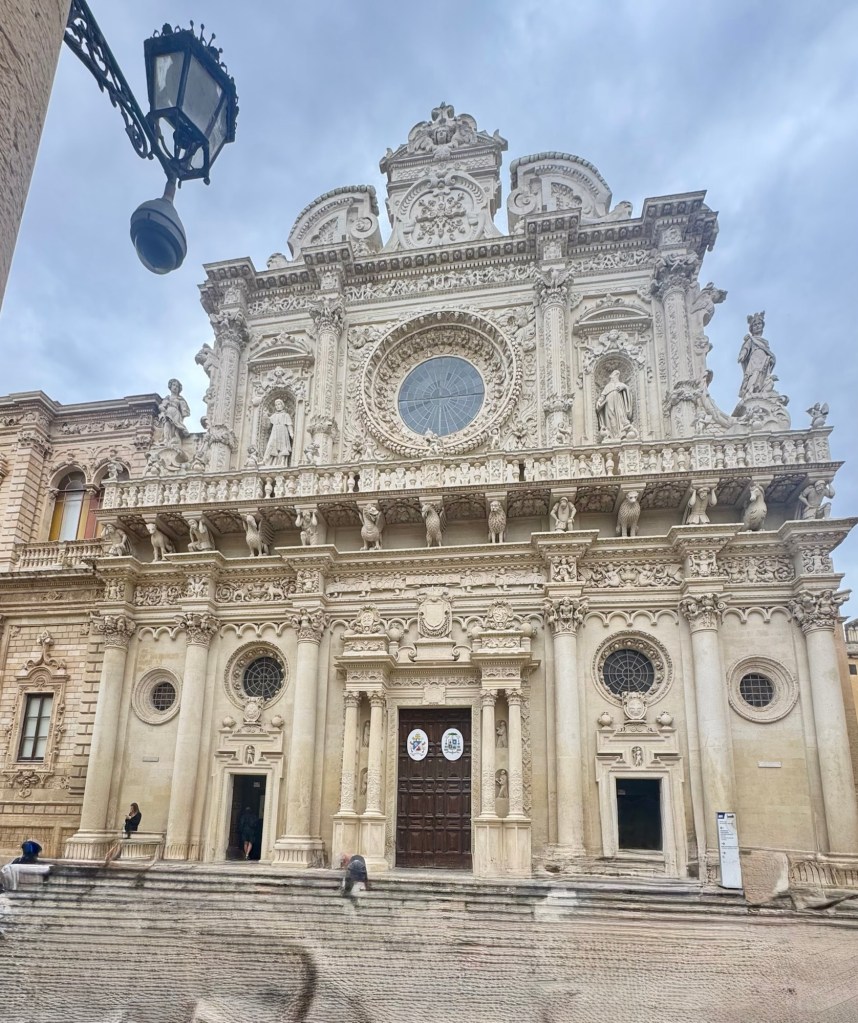
Walter VI, Count of Brienne, had founded a monastery in the 14th century in the current church. In 1549, a new church was begun, using, among the others, houses from Jews who had been ousted from Lecce in 1510. The construction dragged on for two centuries; by 1582, the lower façade had been finished, while the dome was completed in 1590. The portals were added starting in 1606, under the direction of Francesco Antonio Zimbalo. The church was completed by his successors Cesare Penna (upper façade and the rose window) and Giuseppe Zimbalo (decoration of the upper façade).
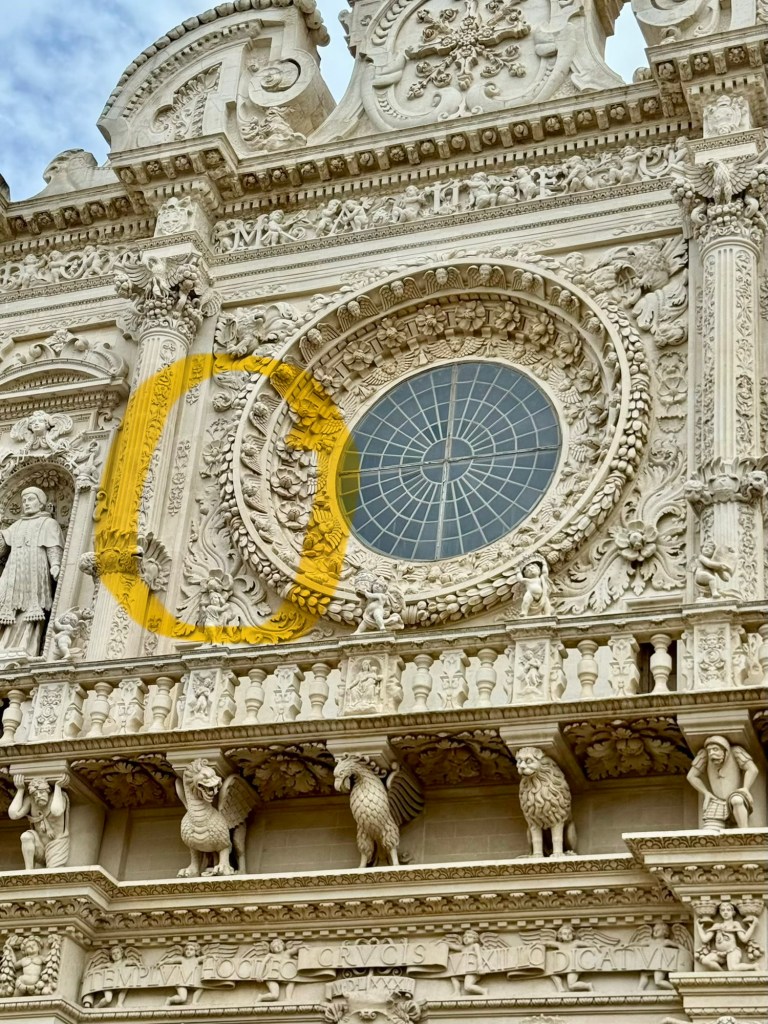
St. Croce took over a century to build. It was built in a period that would mark of a Catholic religion against religion. The facade has 2 levels. The upper level has examples of angels, and flowers signifying heaven while the bottom level has lions, mermaids signifying evil.
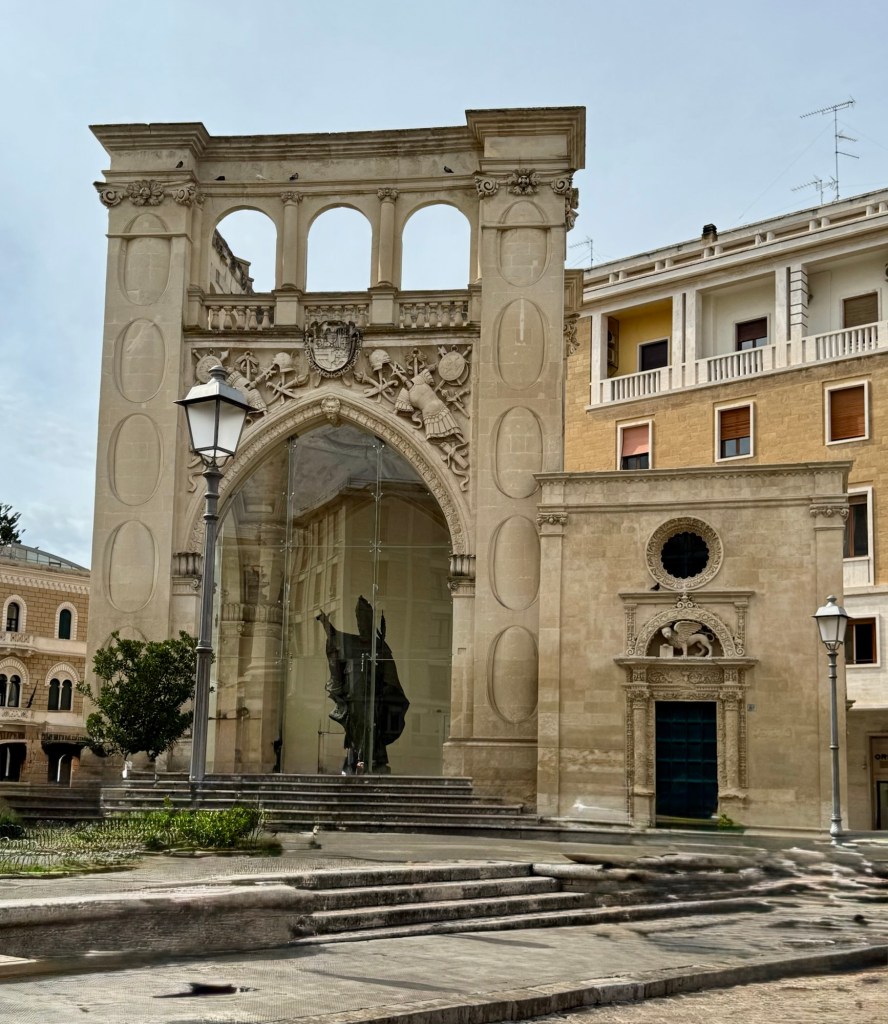
The image shows the Palazzo del Seggio, universally known as Il Sedile, alongside the adjacent Church of San Marco, located in the heart of Piazza Sant’Oronzo in Lecce, Italy.
Il Sedile (Palazzo del Seggio): Commissioned in 1592 by the local mayor Pietro Mocenigo, this building originally served as Lecce’s city hall. It is highly recognizable by its towering, pointed Gothic-Renaissance loggia arches and is now frequently used to house cultural exhibits or tourist information offices. Inside the glass framing stands a prominent statue.
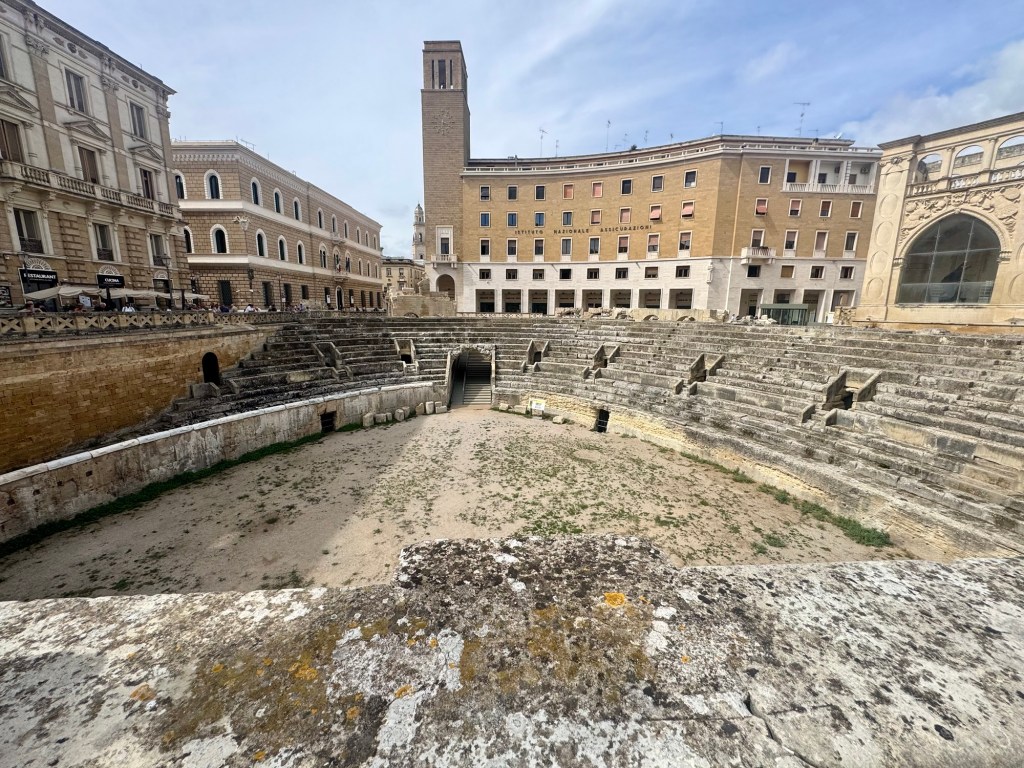
The Roman amphitheater of Lecce is situated in the main piazza of the old town. Even more interesting, it was completely hidden from view and its existence unknown until as recently as 1901. The marvelous theater spent centuries buried under the earth and structures built over the years, until construction workers uncovered it while digging to build a bank
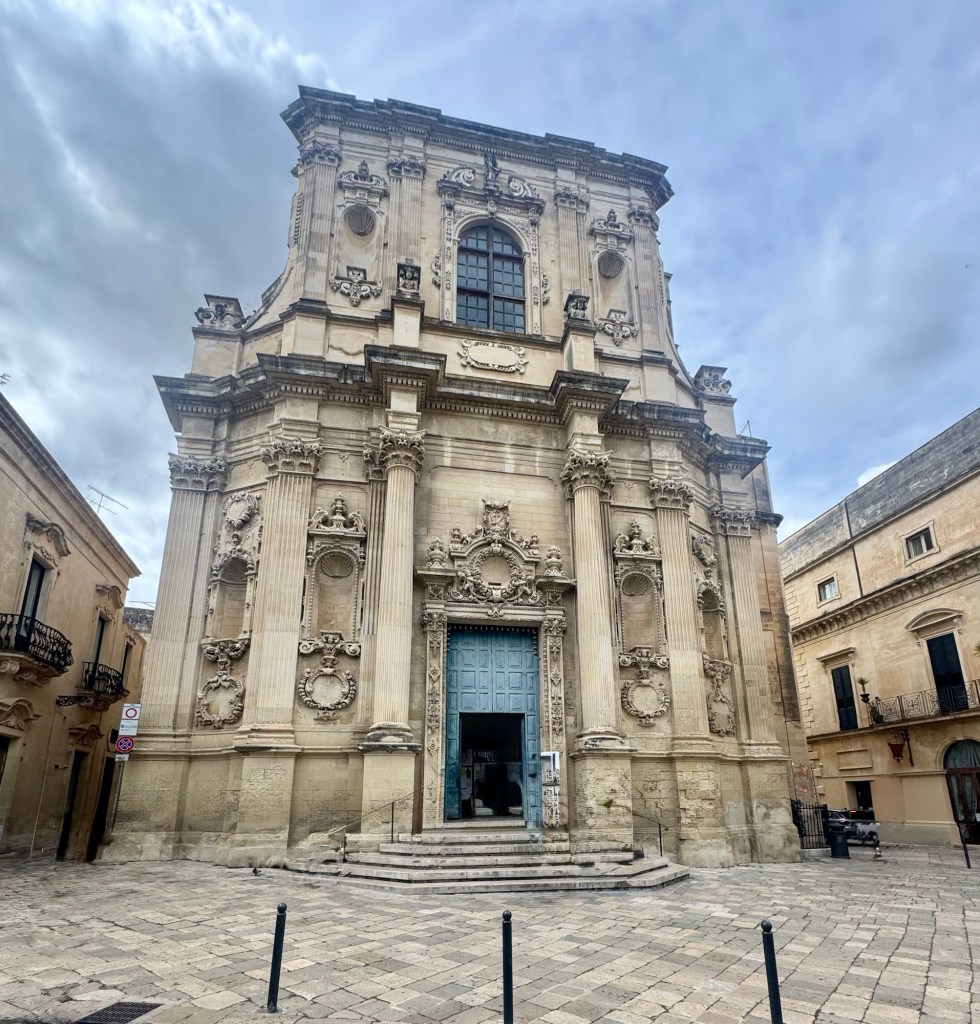
A notable 15th-century church given a baroque makeover between 1687 and 1691, Santa Chiara is one of the most important and admired churches in Lecce. Inside, every niche and surface swirls with twisting columns and ornate statuary. The ceiling is 18th-century Leccese cartapestra (papier-mâché) masquerading as wood.
We stopped for gelato and then drove up to Monopoli where we will be staying for 2 night. Grabbed a pizza for dinner and then went back to our place for the night.
Giulia will be joining us for a couple of nights.
Ciao for now! ❤️


Leave a comment