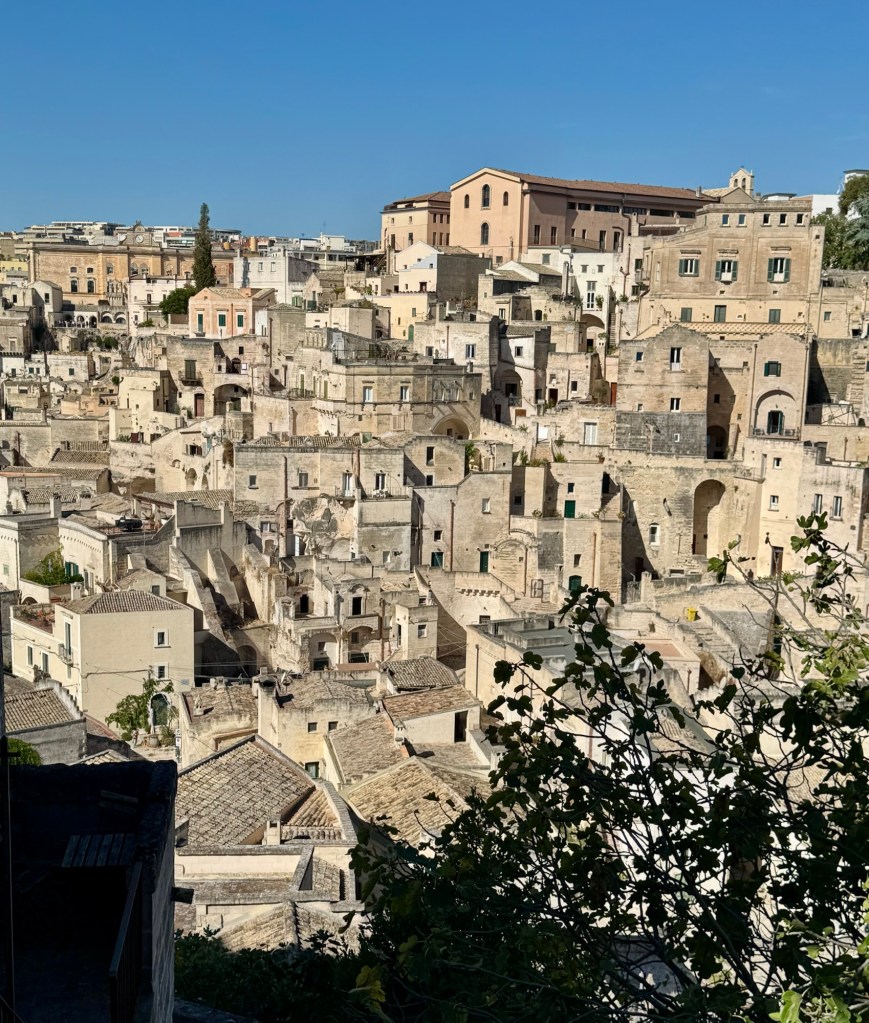
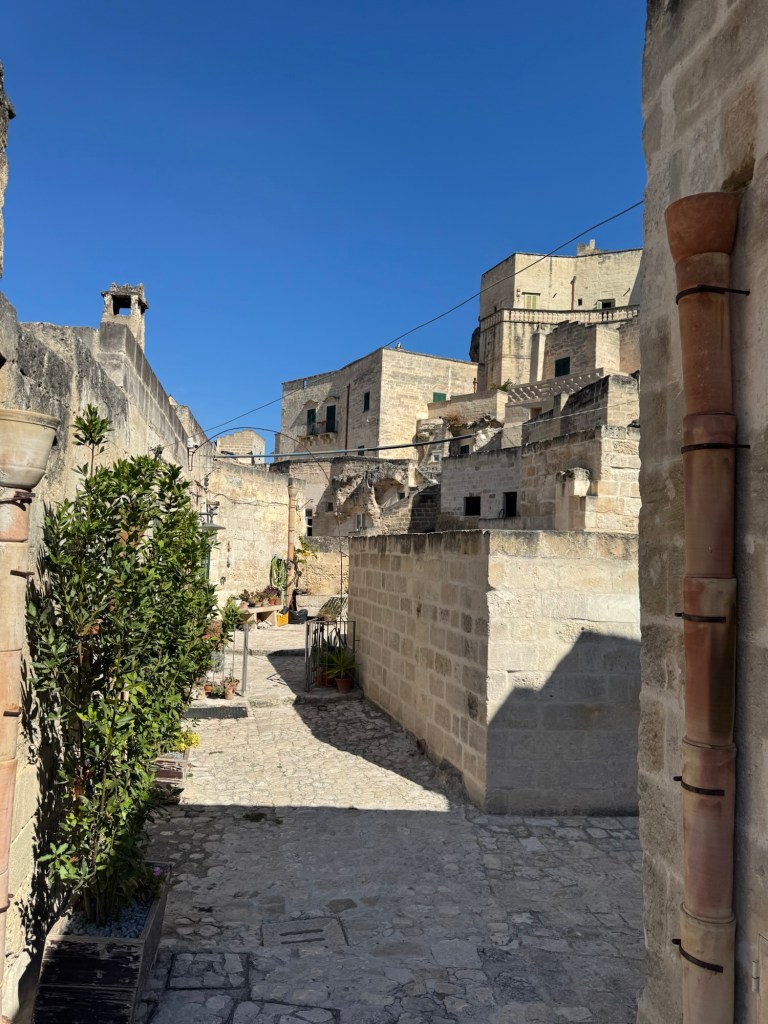
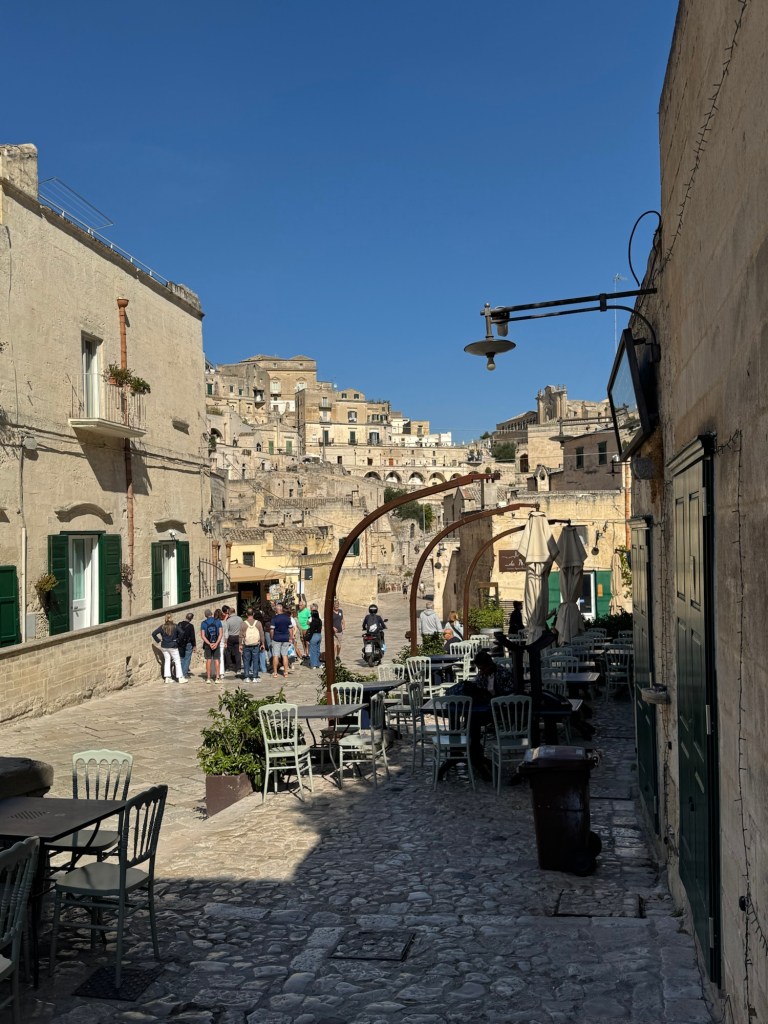
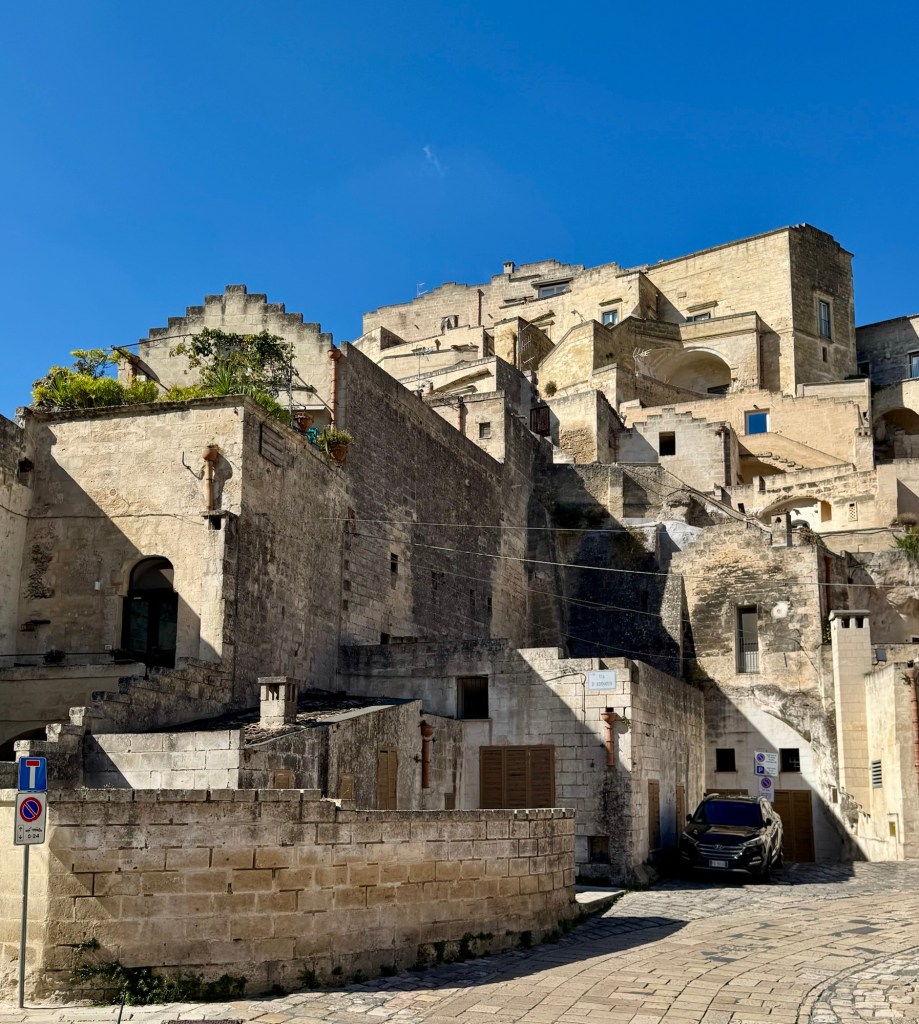
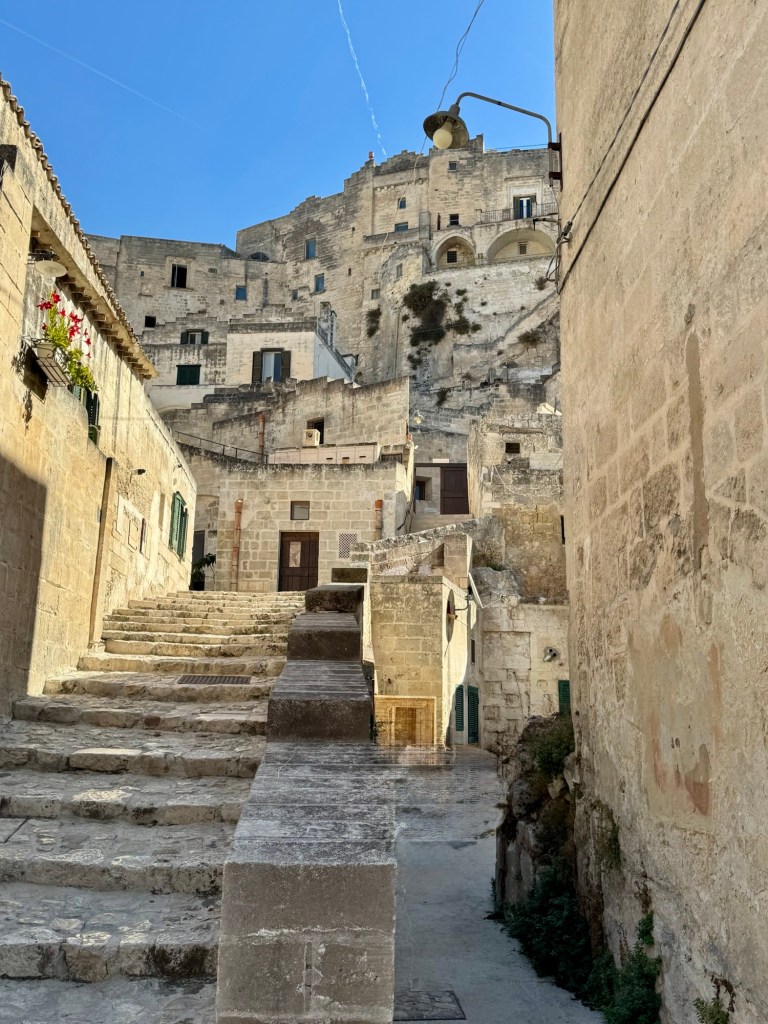
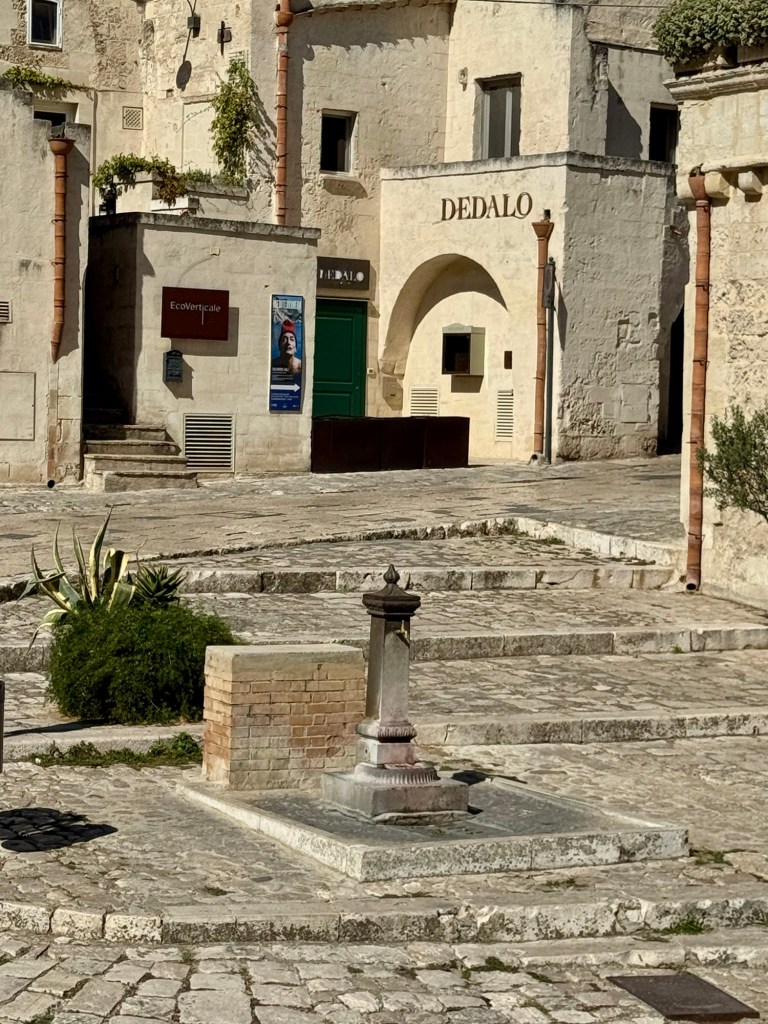
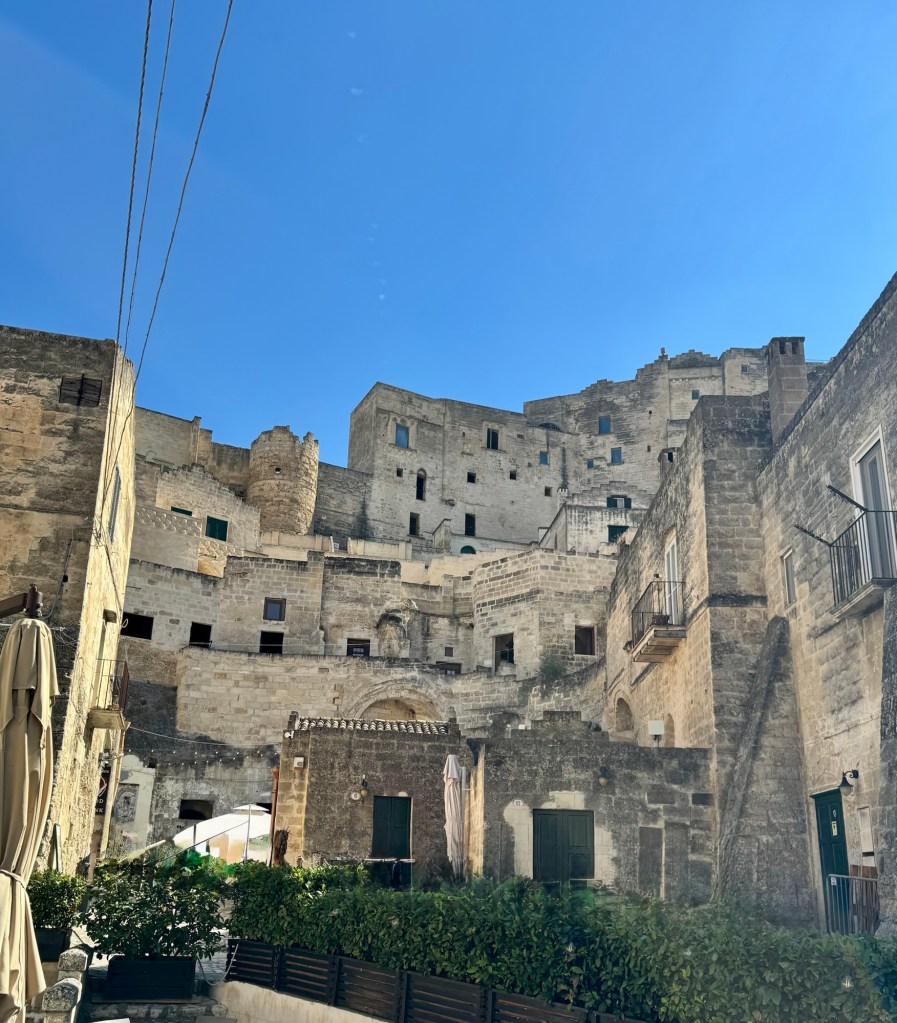
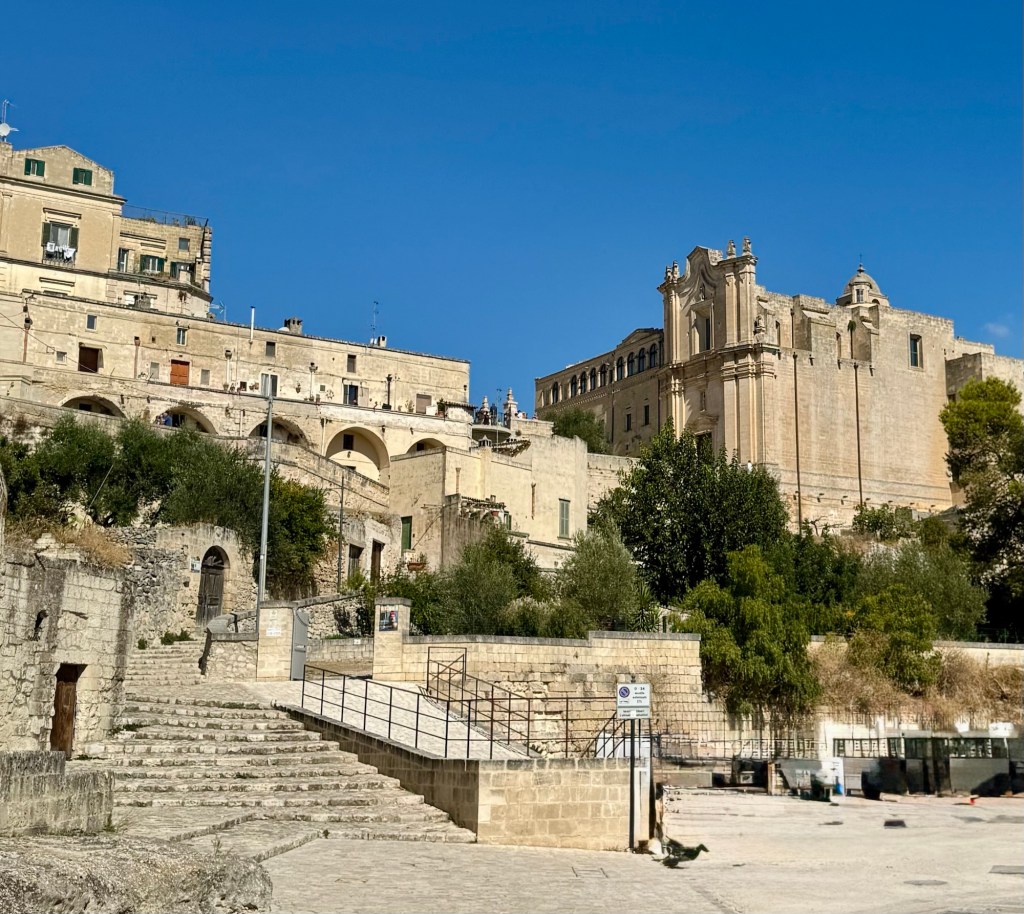
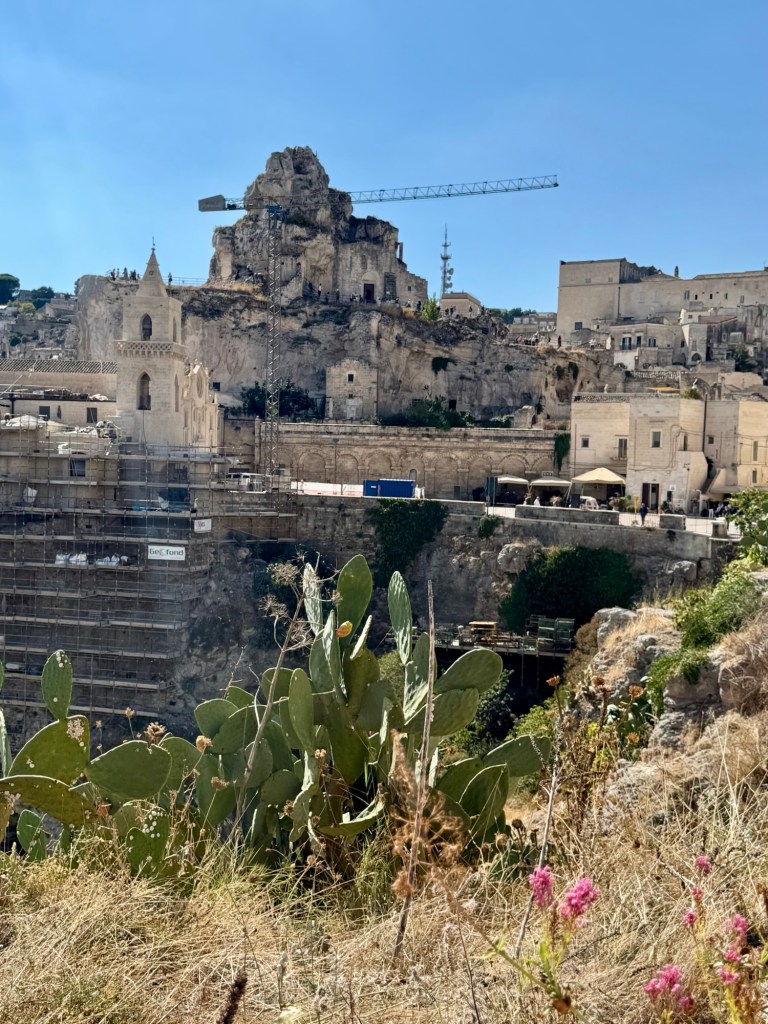
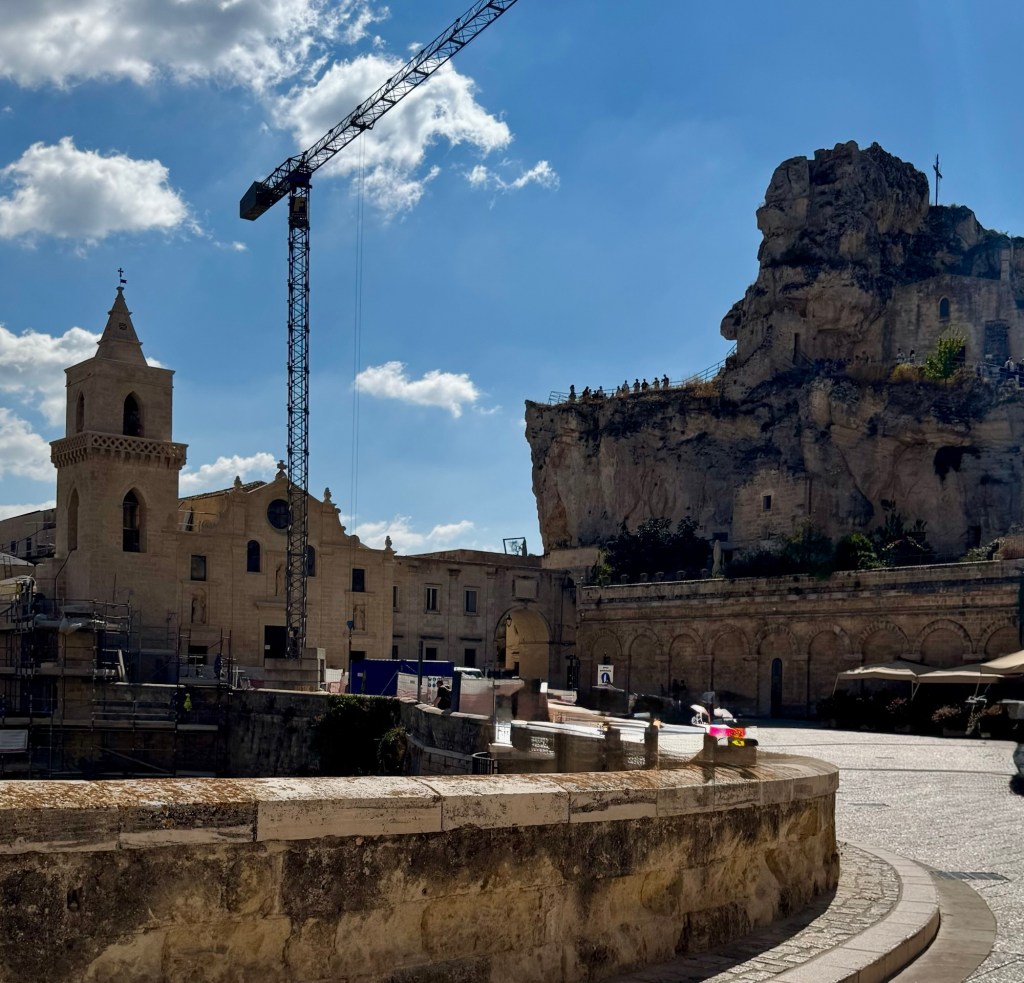
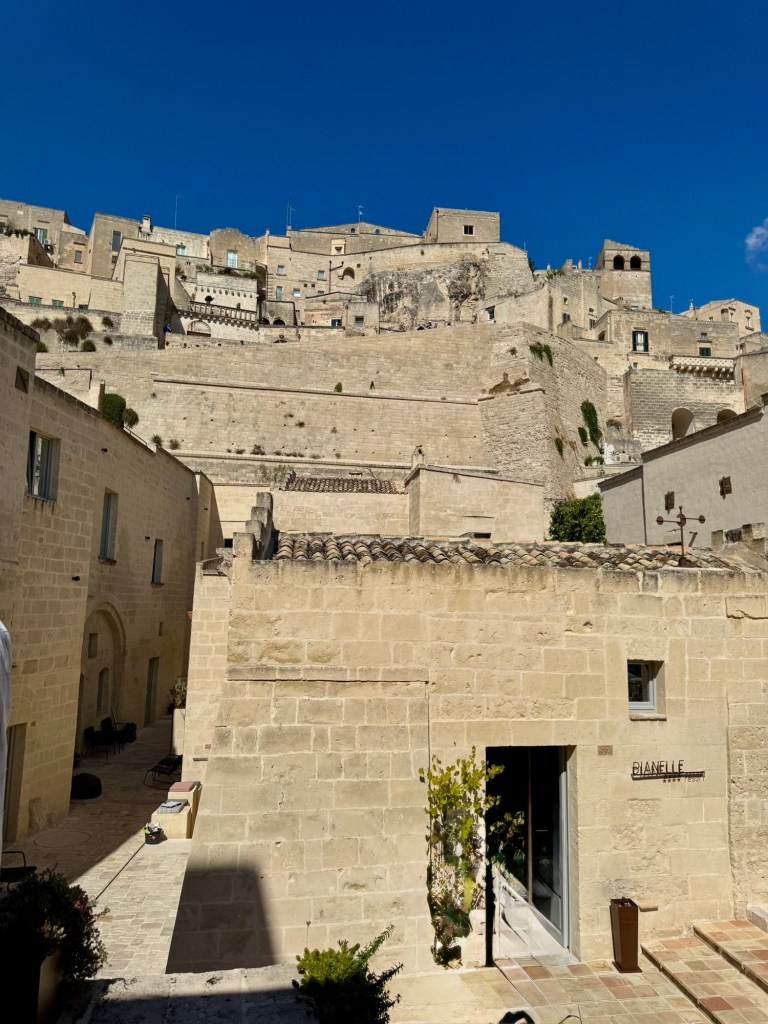
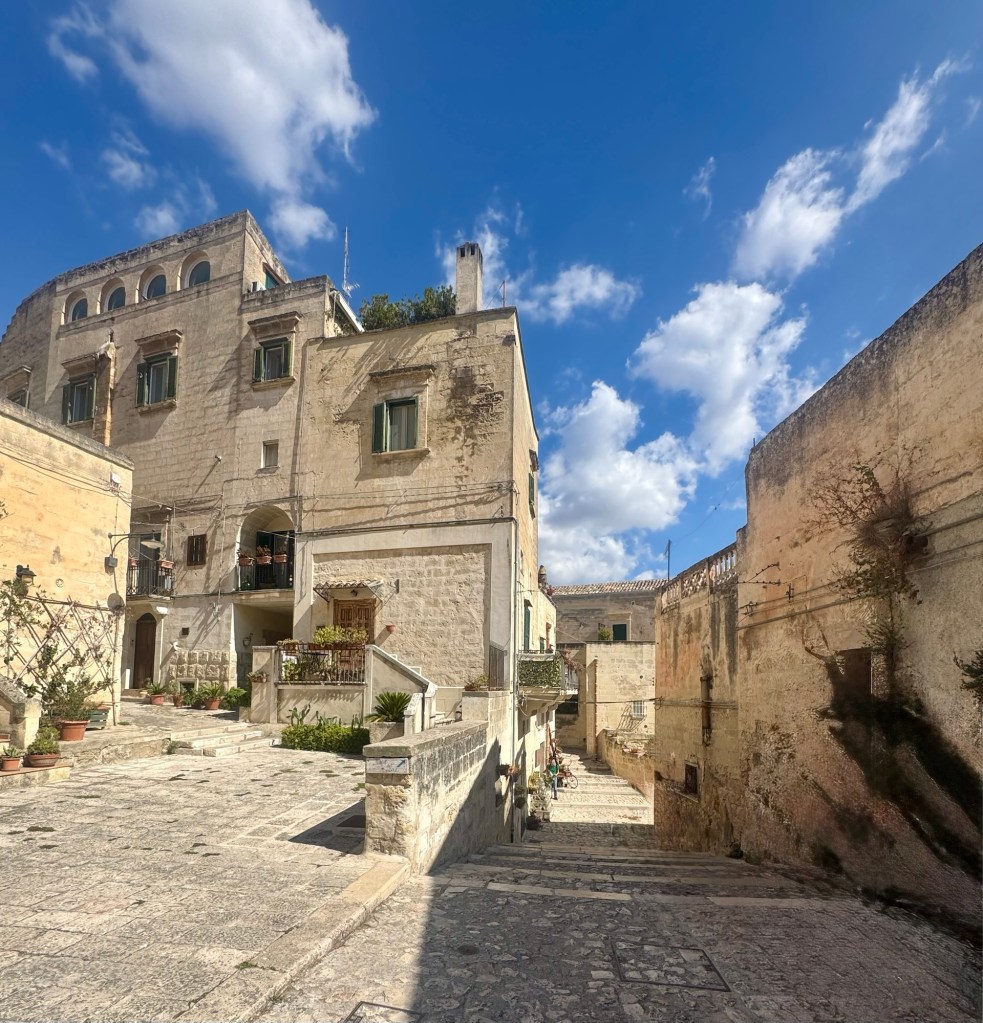
Our last day. Today we took a tour of Matera. Pictures don’t do it justice.
The selected region shows the bronze sculpture “Tree of Life” (Albero della Vita) by Italian artist Andrea Roggi, located in the historic city of Matera, Italy.
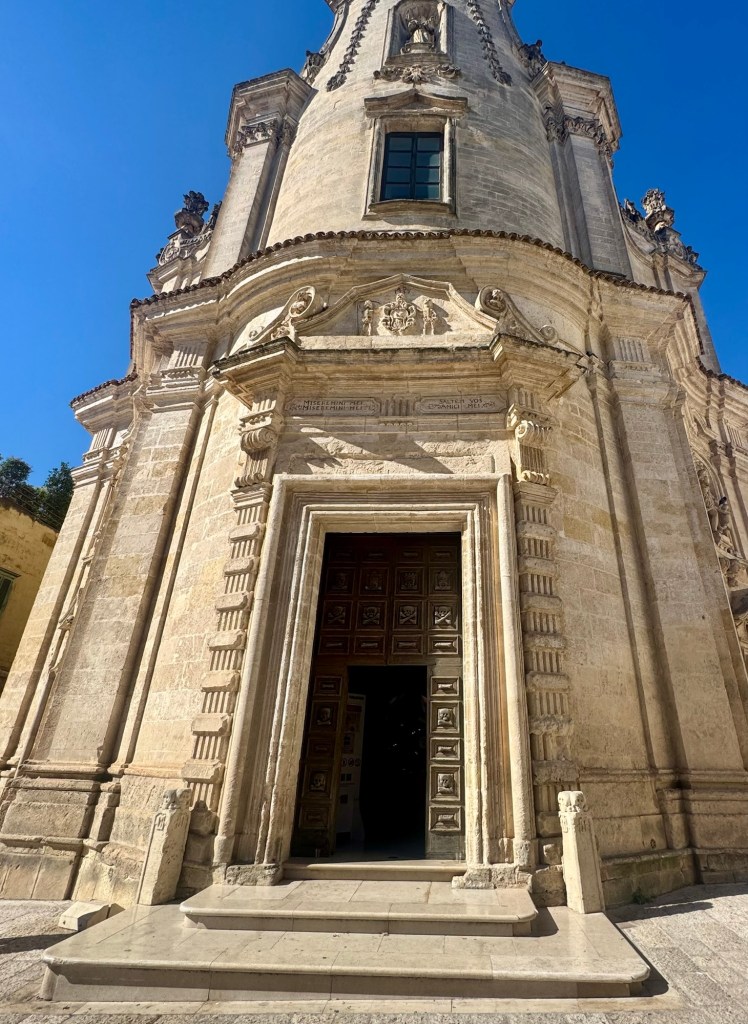
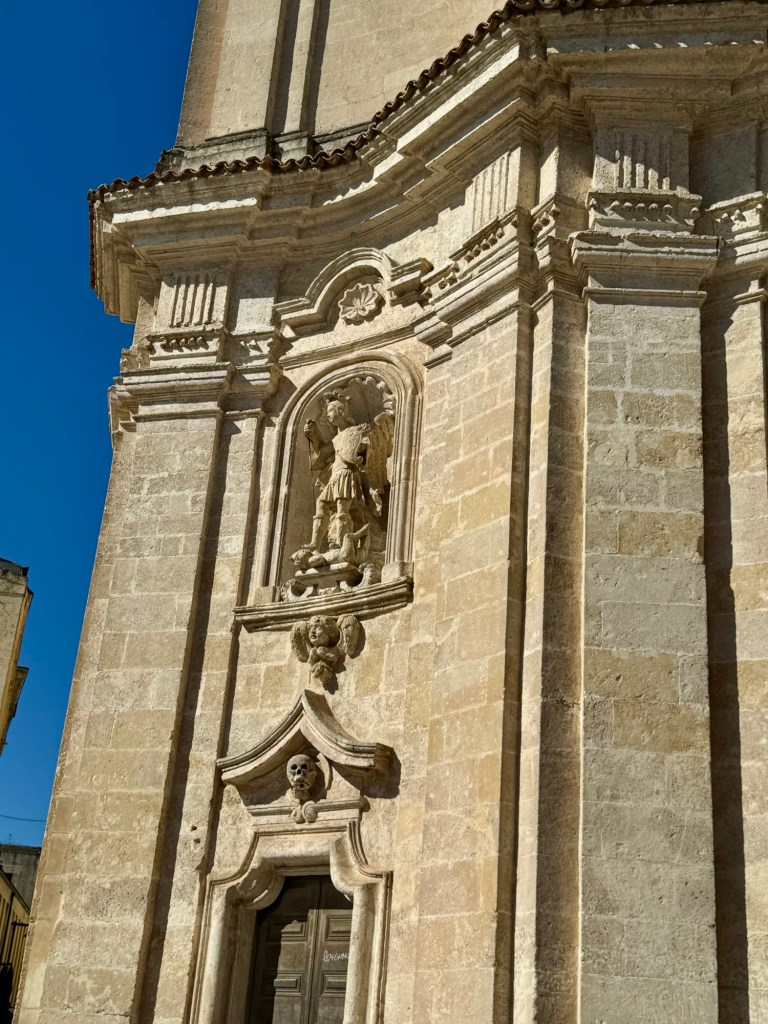
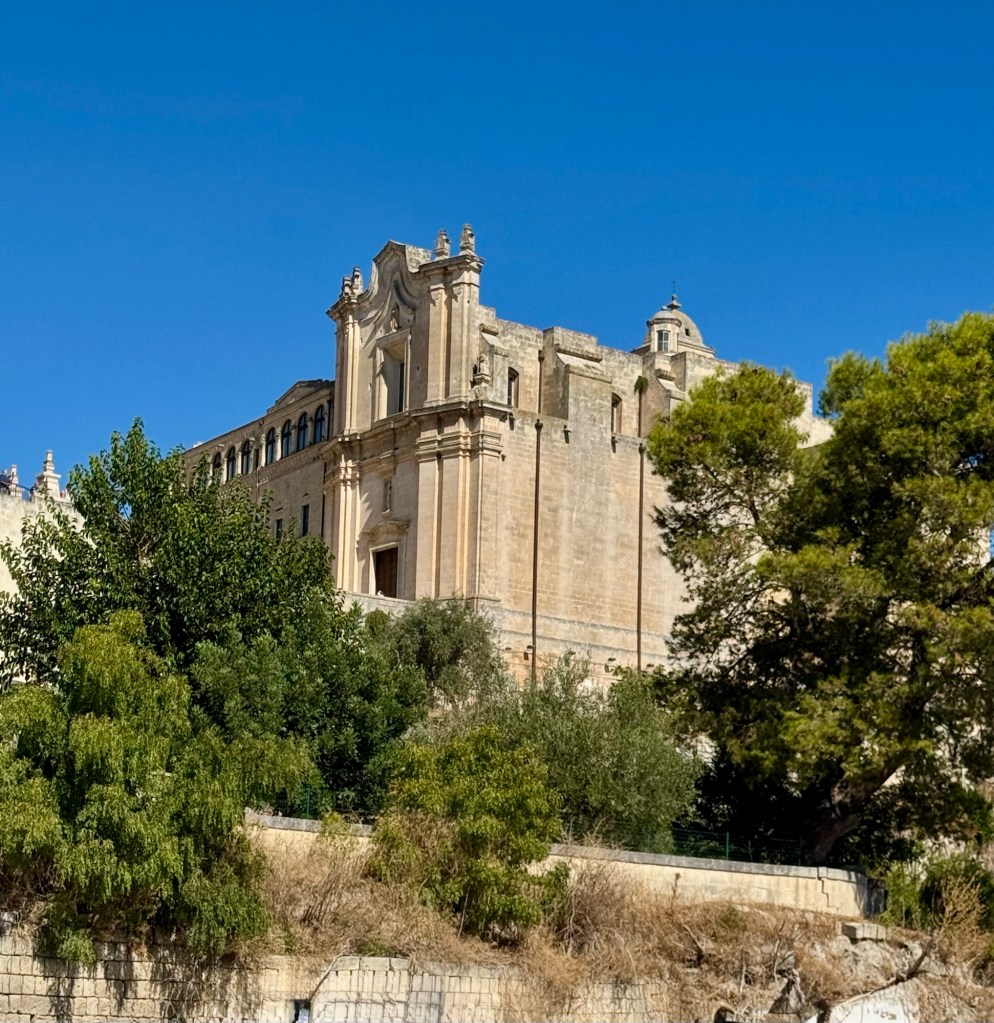
Built between 1725 and 1747 by the Confraternity of the Souls of Purgatory (funded by citizen donations and local shepherds). The Chiesa del Purgatorio in Matera, Italy, is an 18th-century Baroque church renowned for its striking, death-themed architecture and symbolism reminding visitors of mortality and social equality in death.
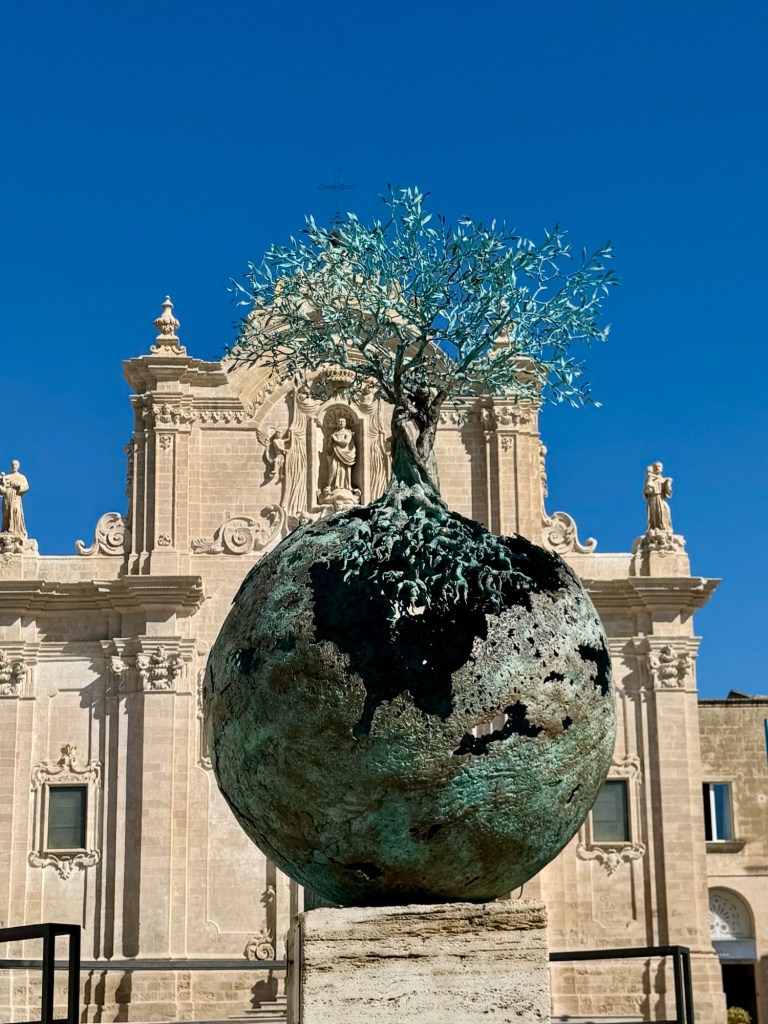
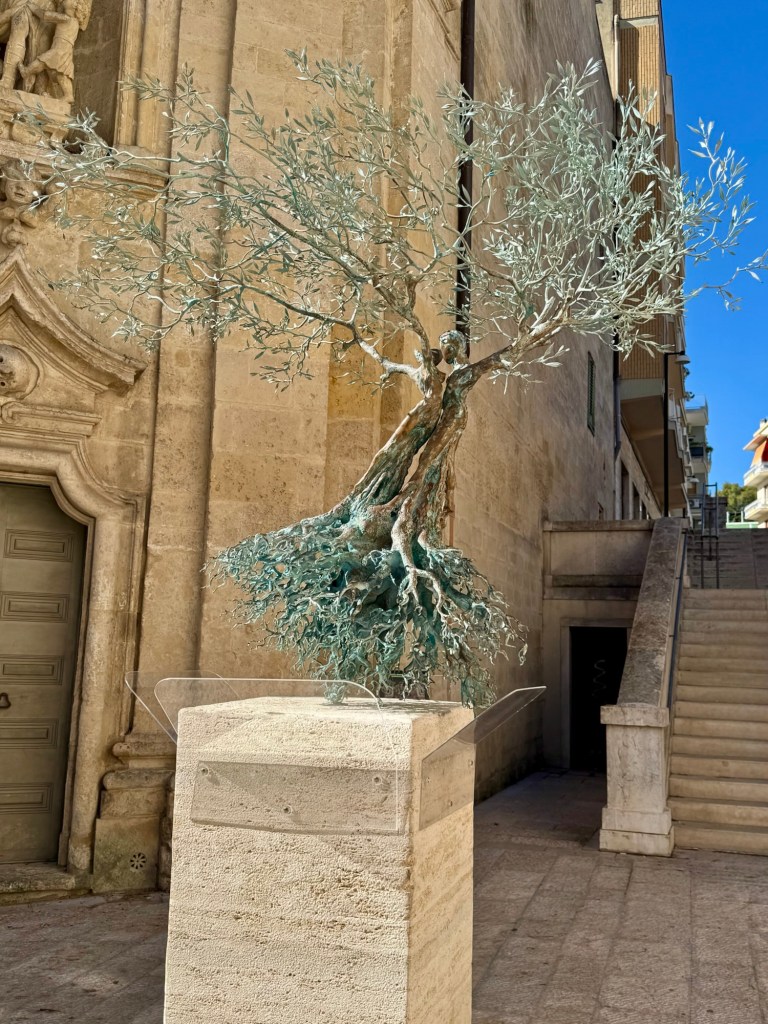
This is the “Tree of Life” bronze sculpture by Italian artist Andrea Roggi, located in the historic city of Matera.
A blooming olive tree sprouts from the top of a large, hollow bronze globe. The artist uses the roots and branches to symbolize the past, present, and future of humanity. It stands out against the ancient stone architecture and cave-dwelling history of Matera.
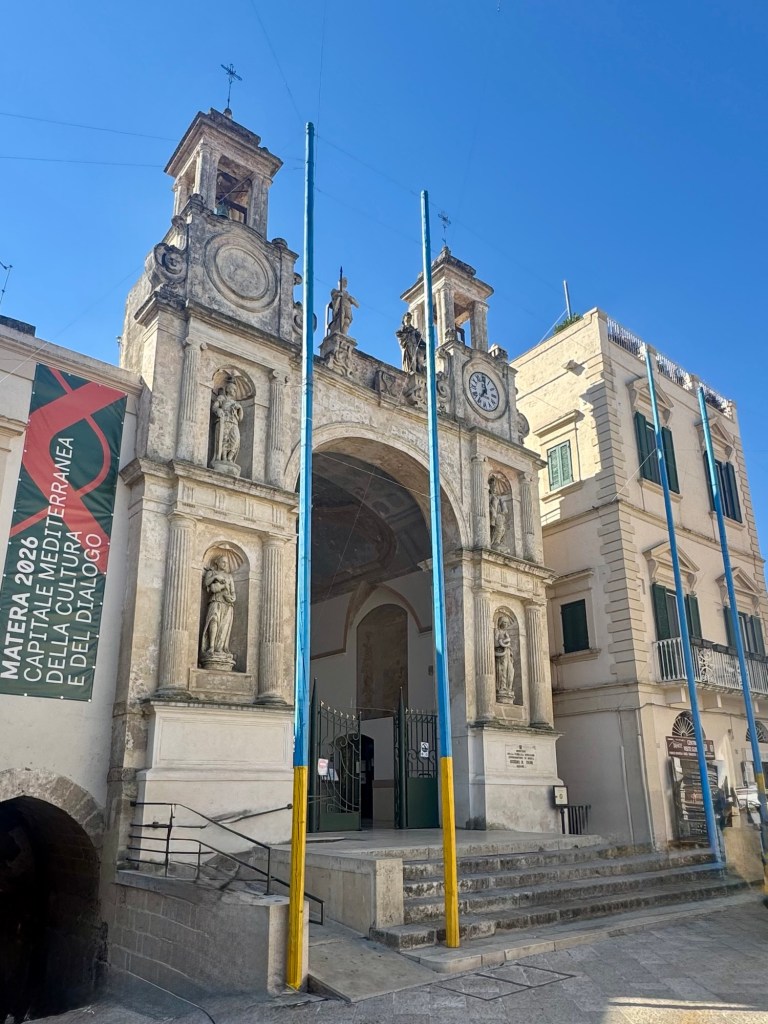
Features a late-Renaissance/Baroque-style loggia with a grand central arch, twin clock/bell towers at the top, and stone statues in the facade niches. It served as the historic seat of civil administration and municipal power in Matera, and currently houses the Egidio R. Duni State Conservatory of Music.
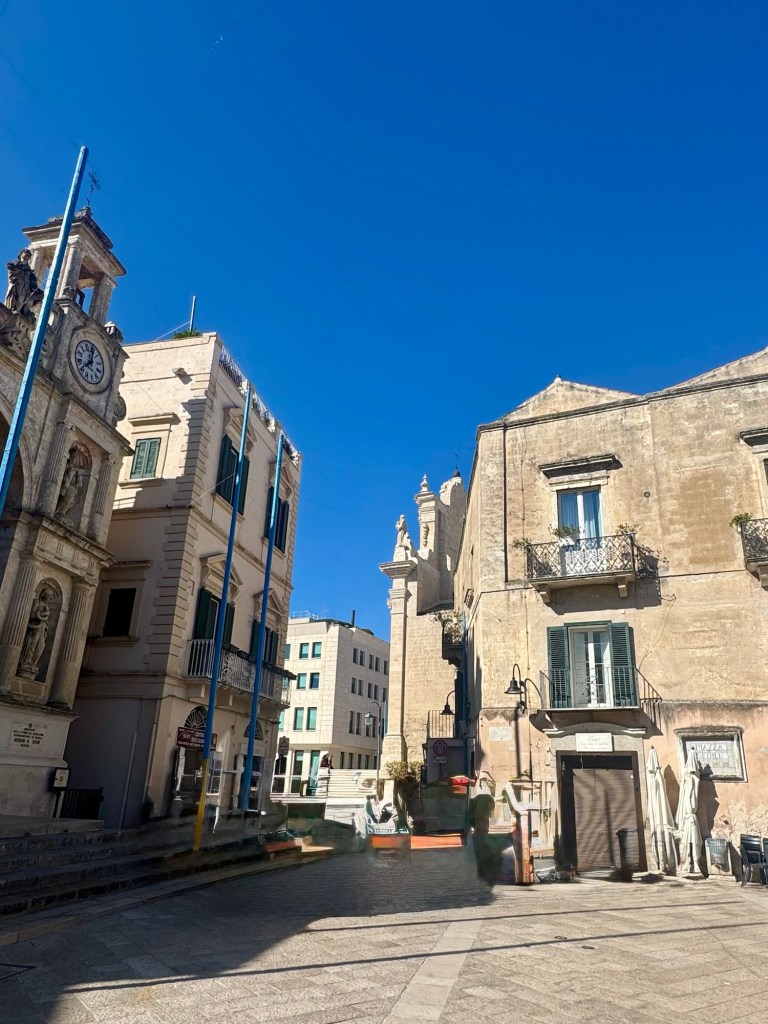
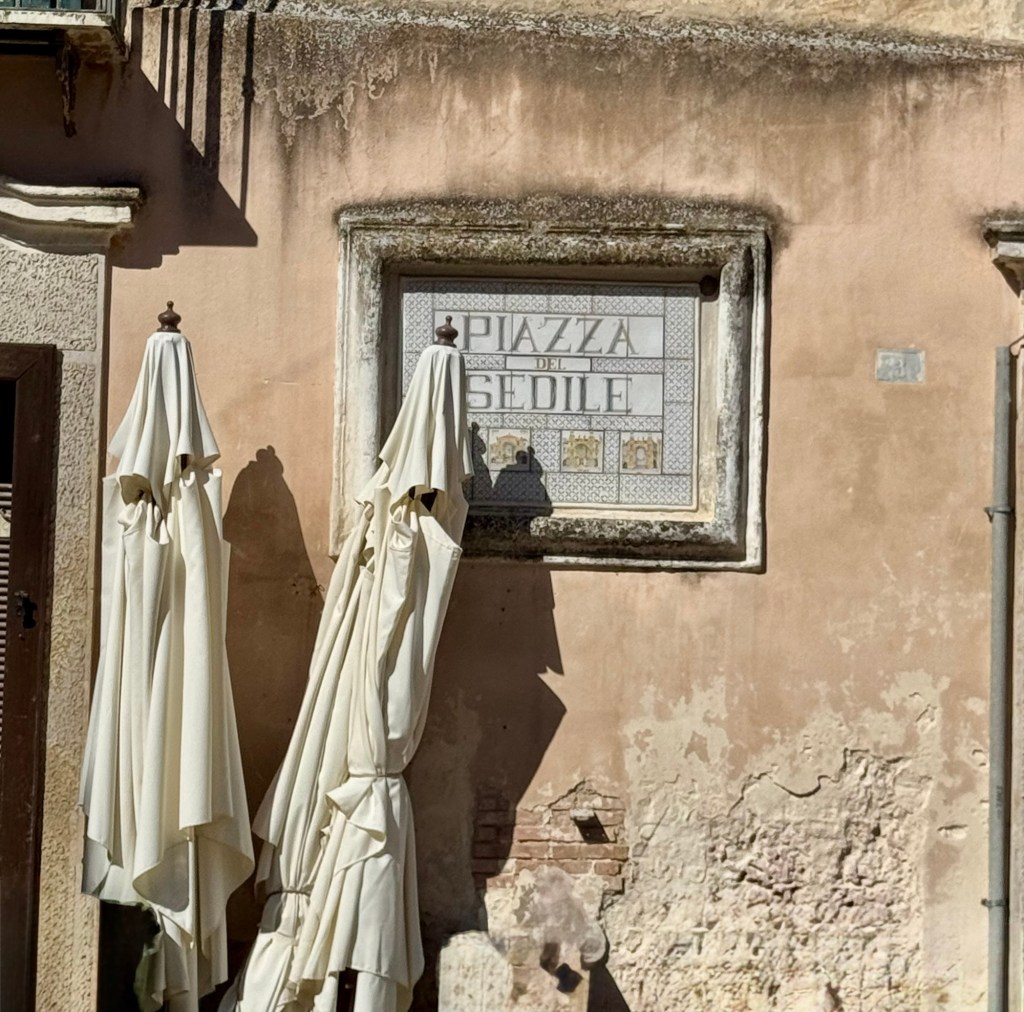
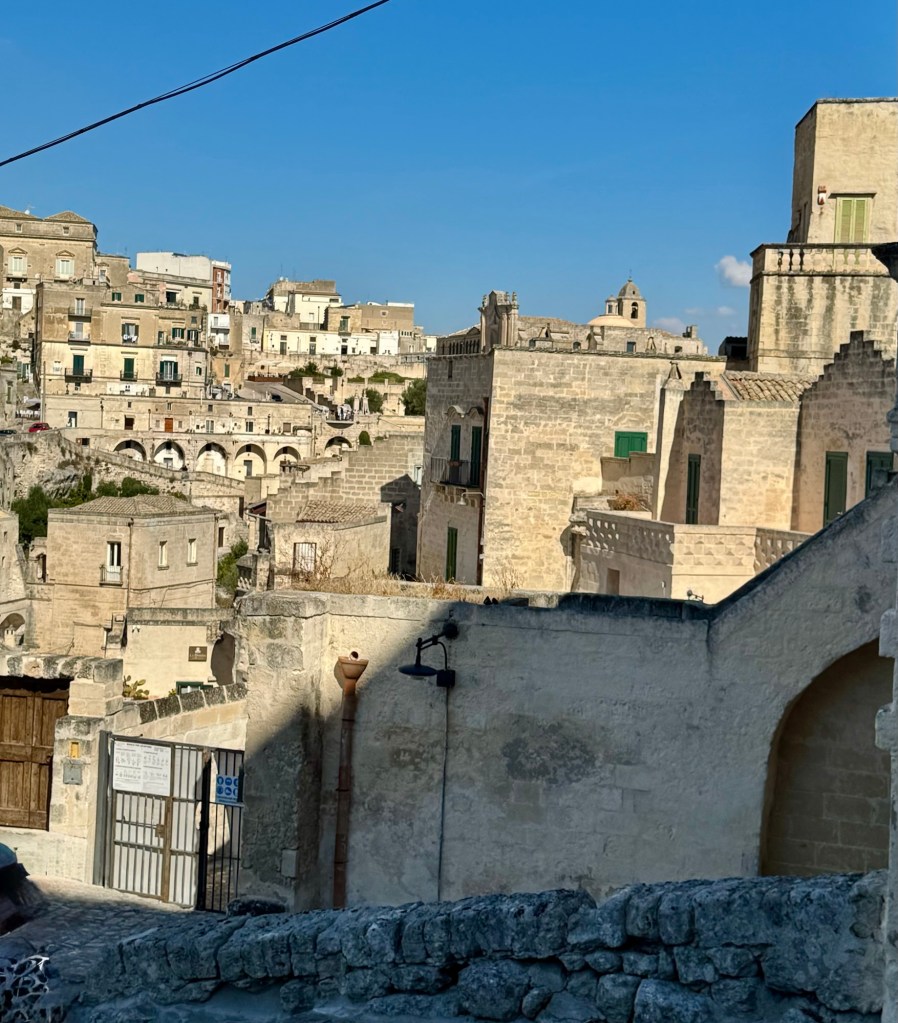
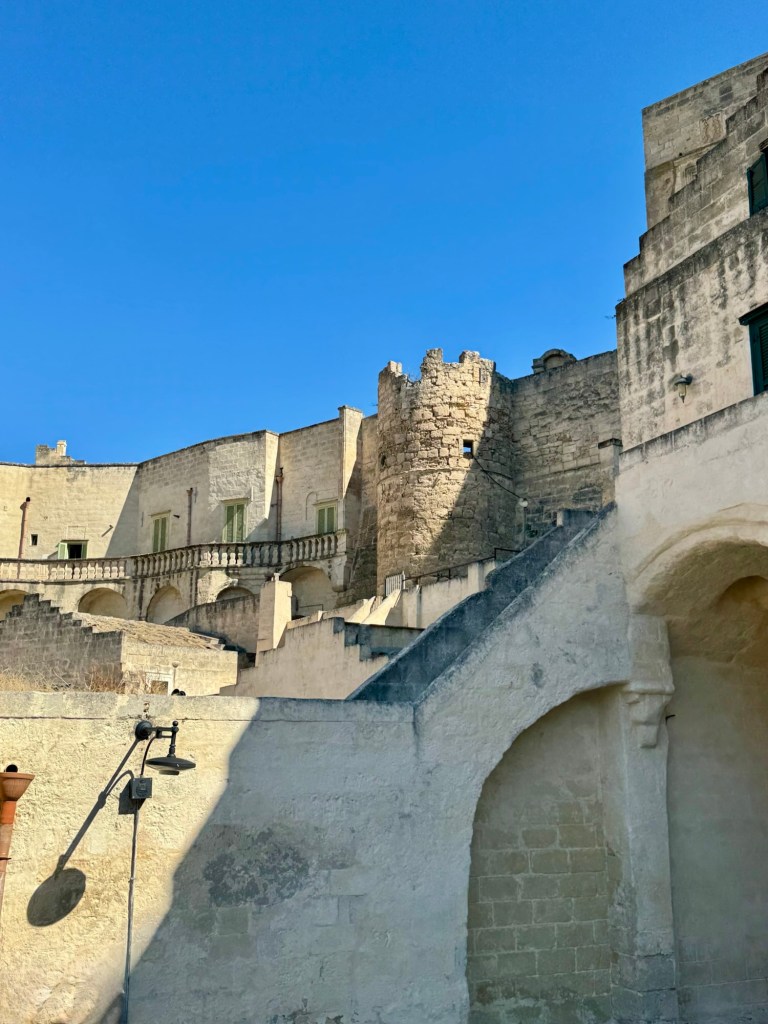
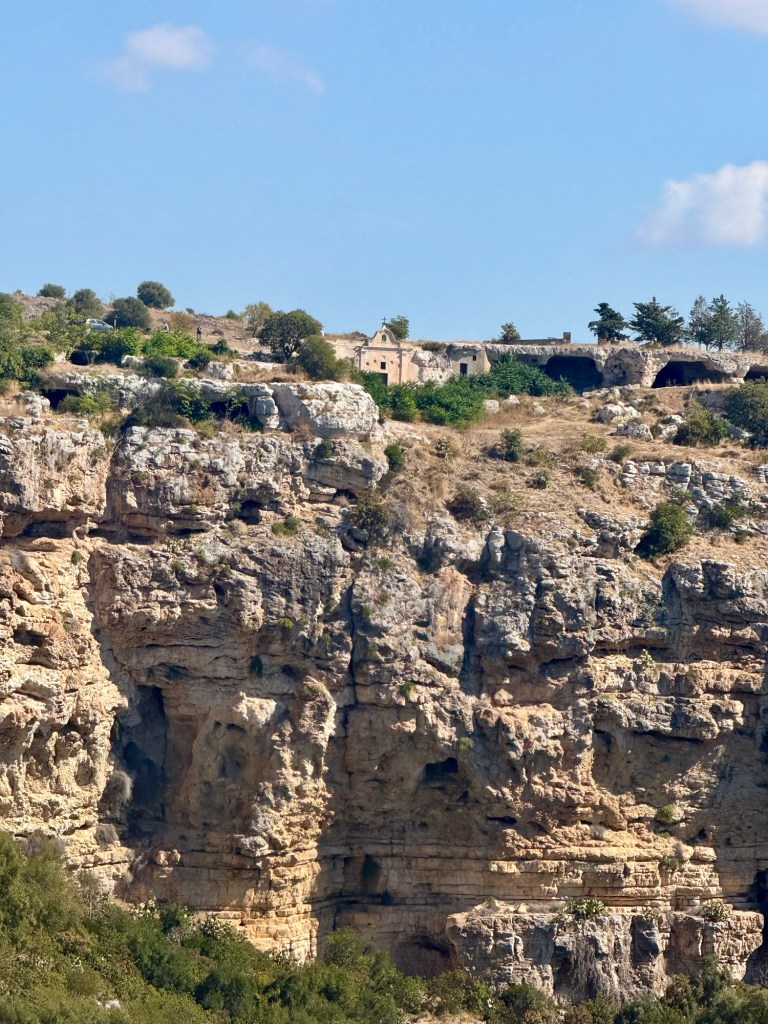
The most amazing views from our walking tour.
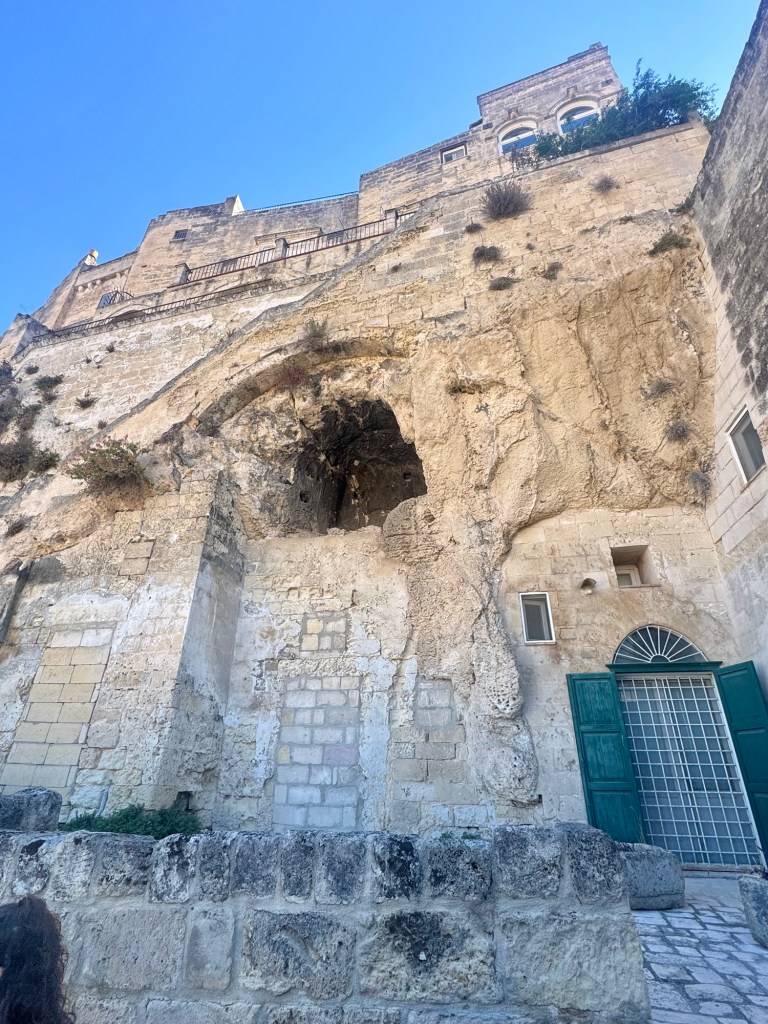
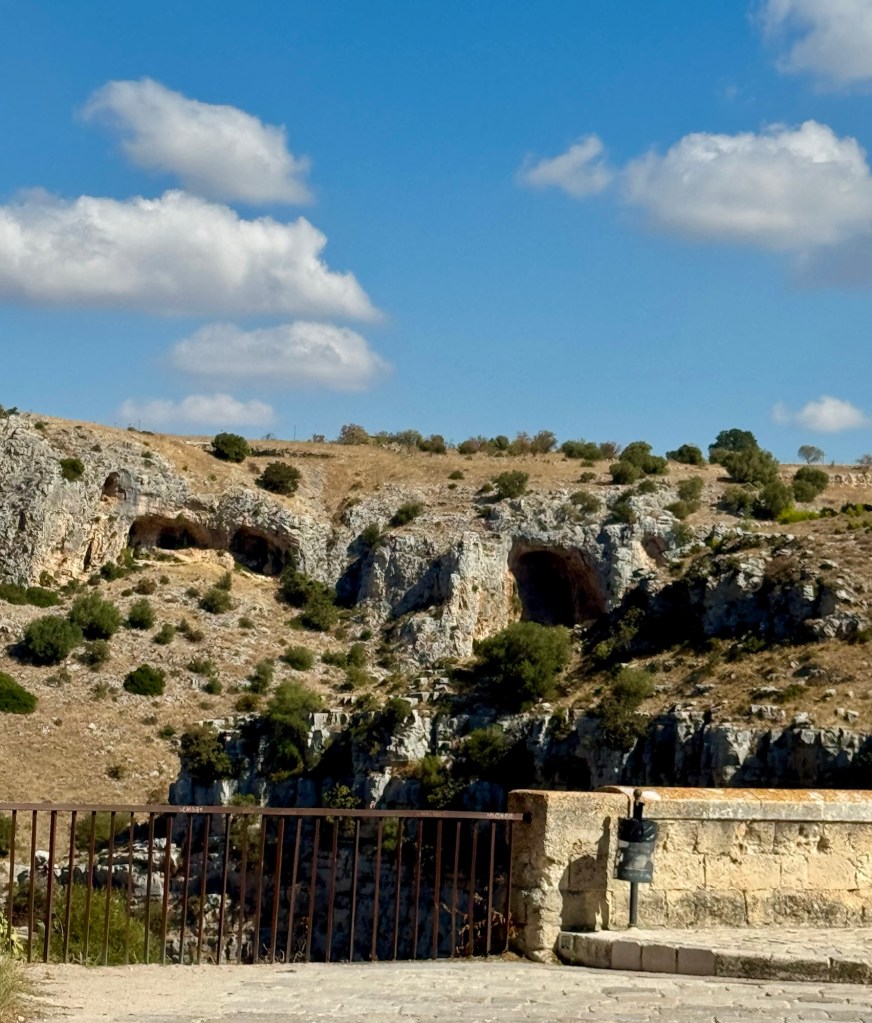
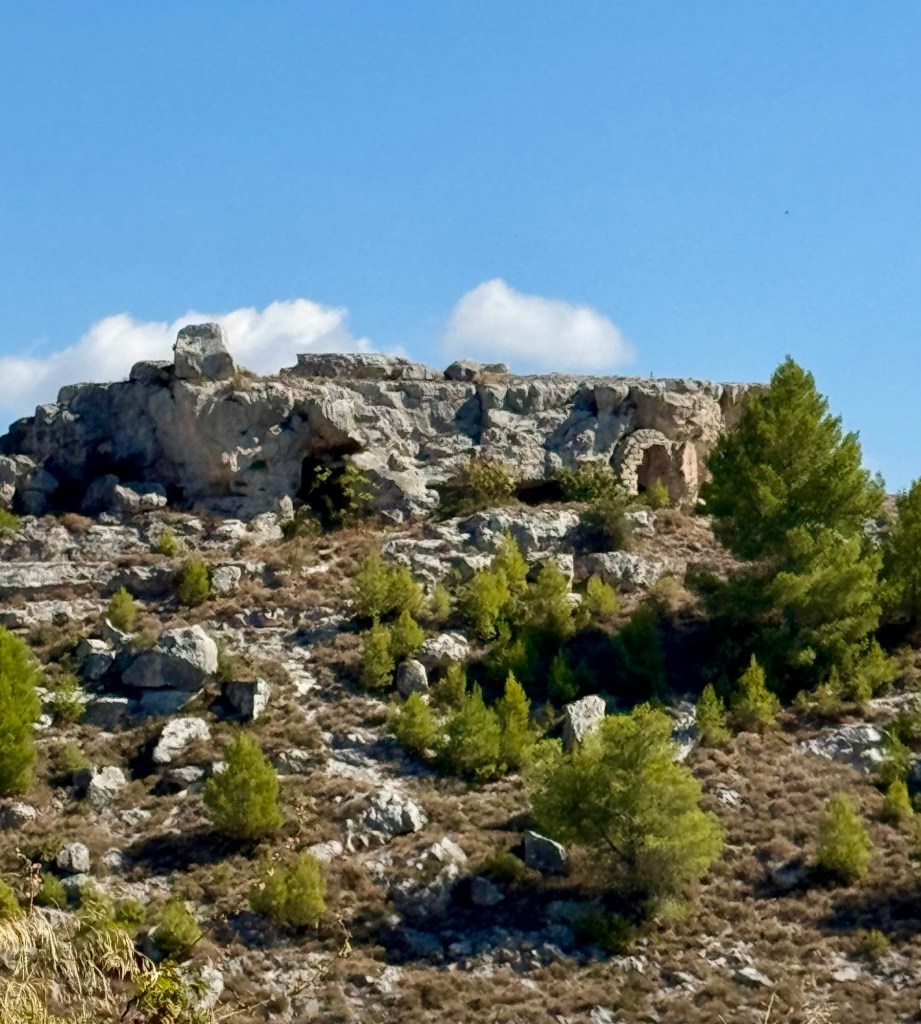
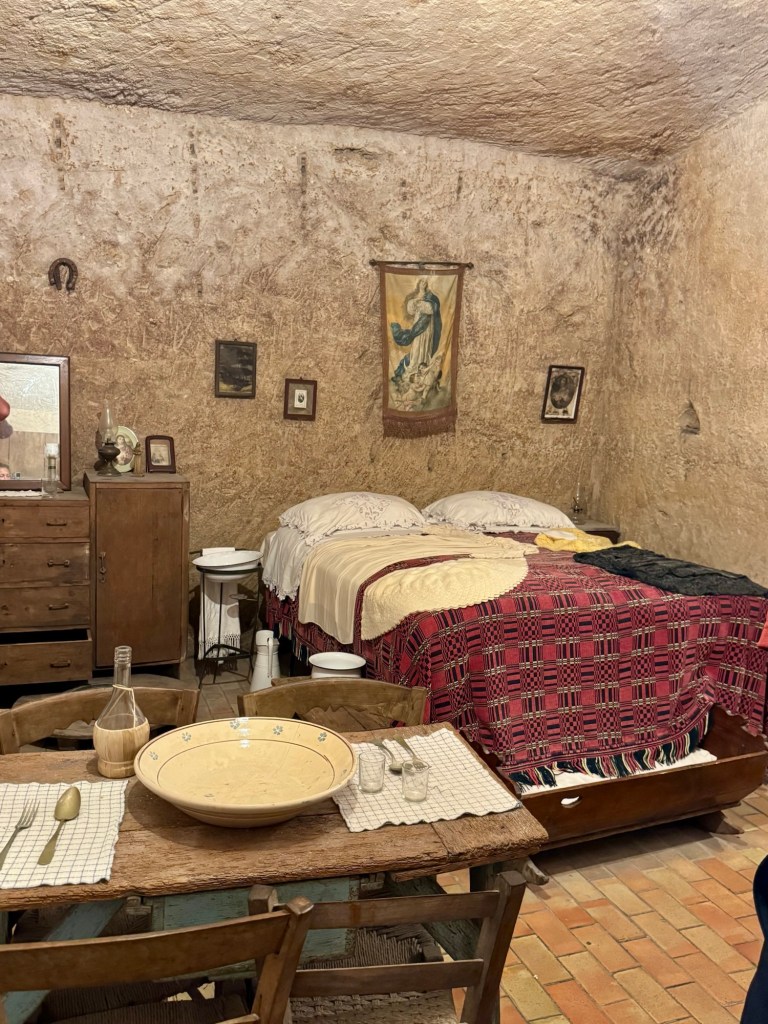
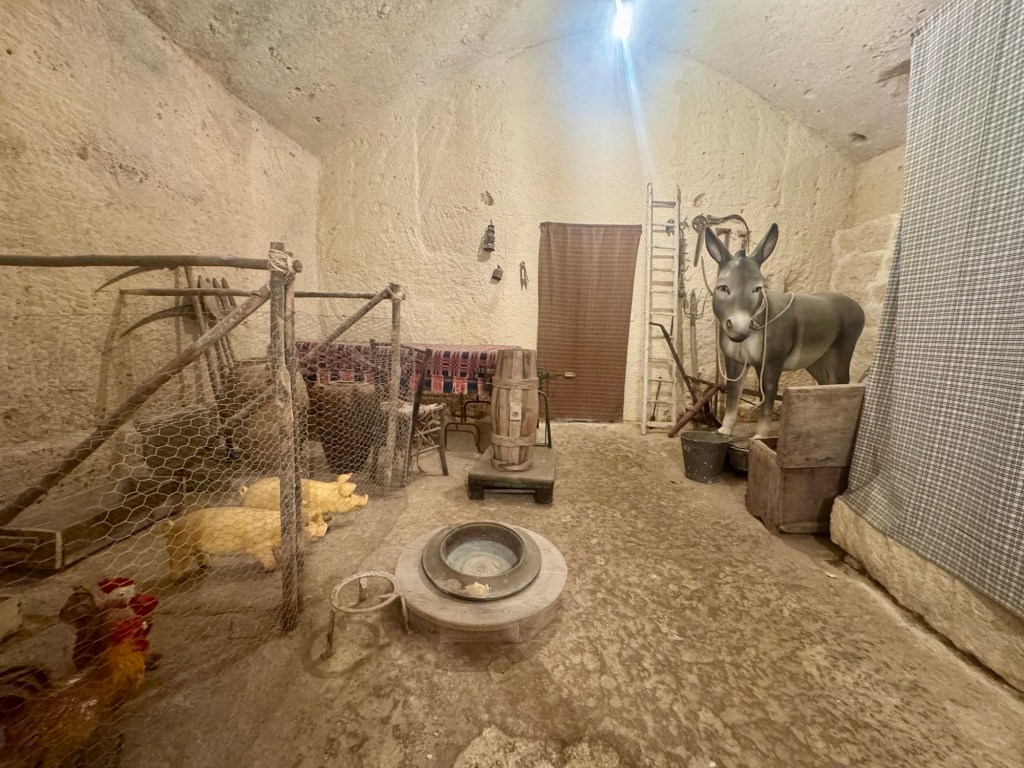
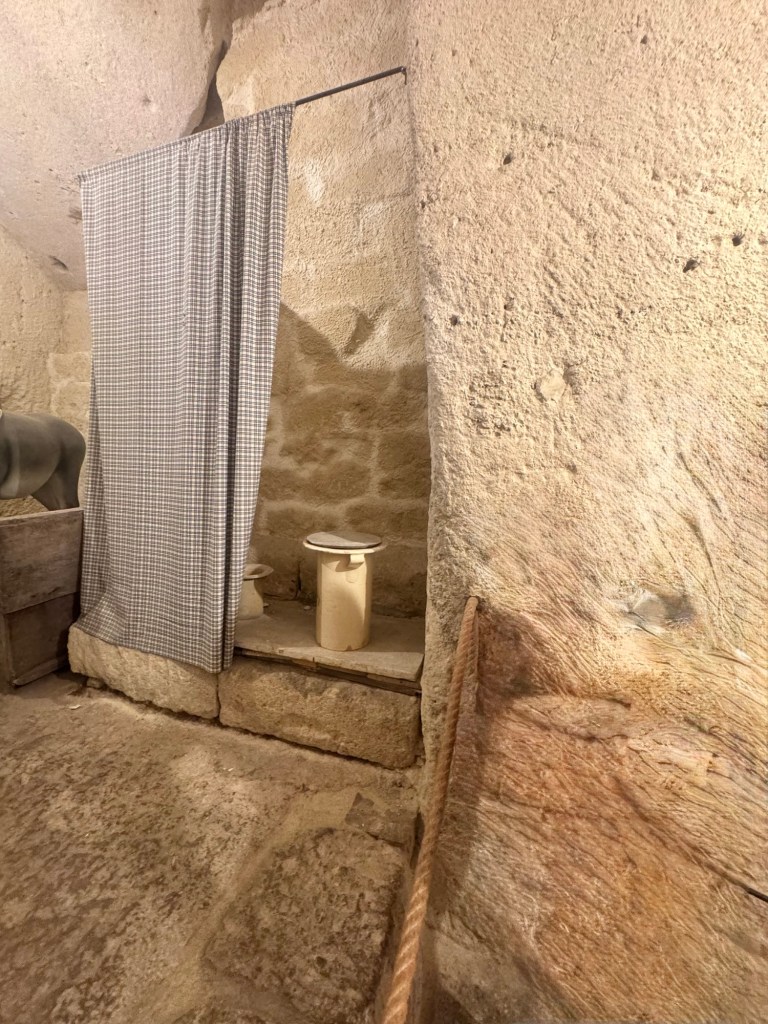
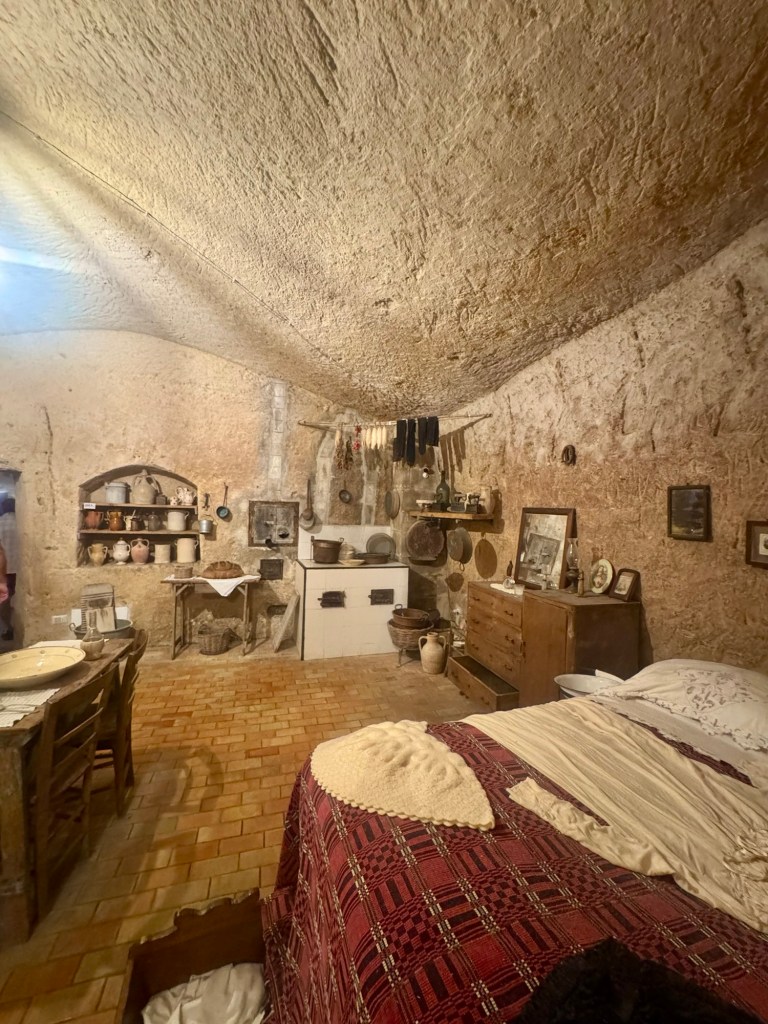
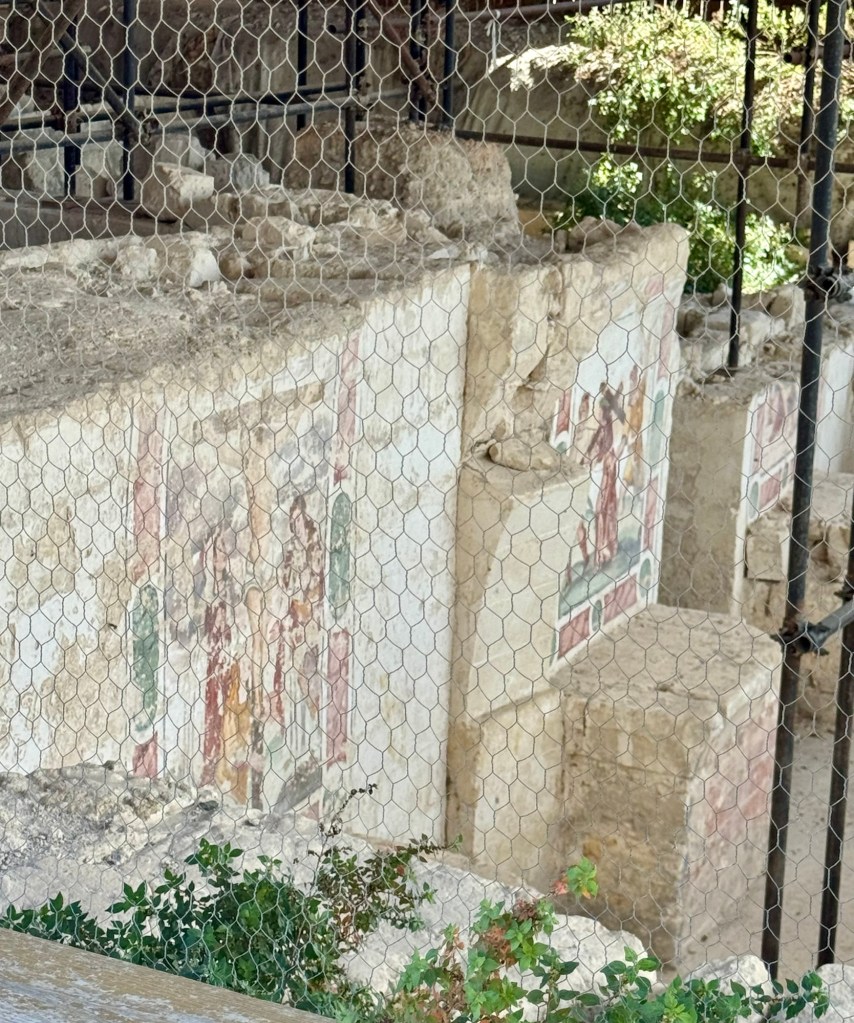
An inside view of a cave house.
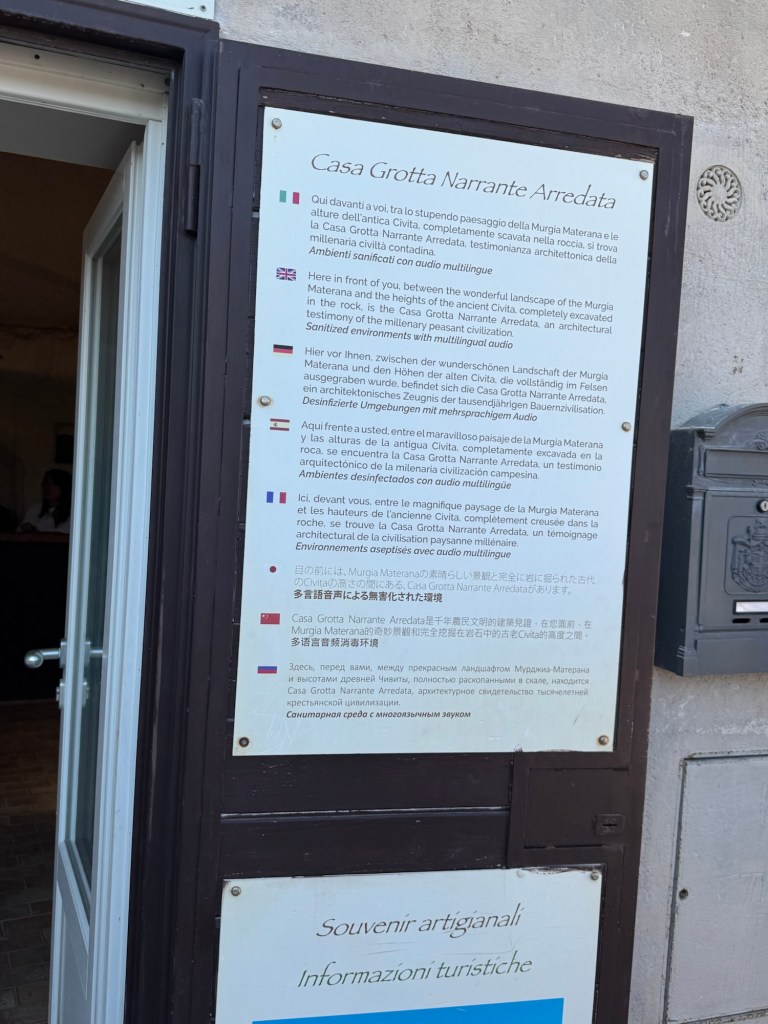
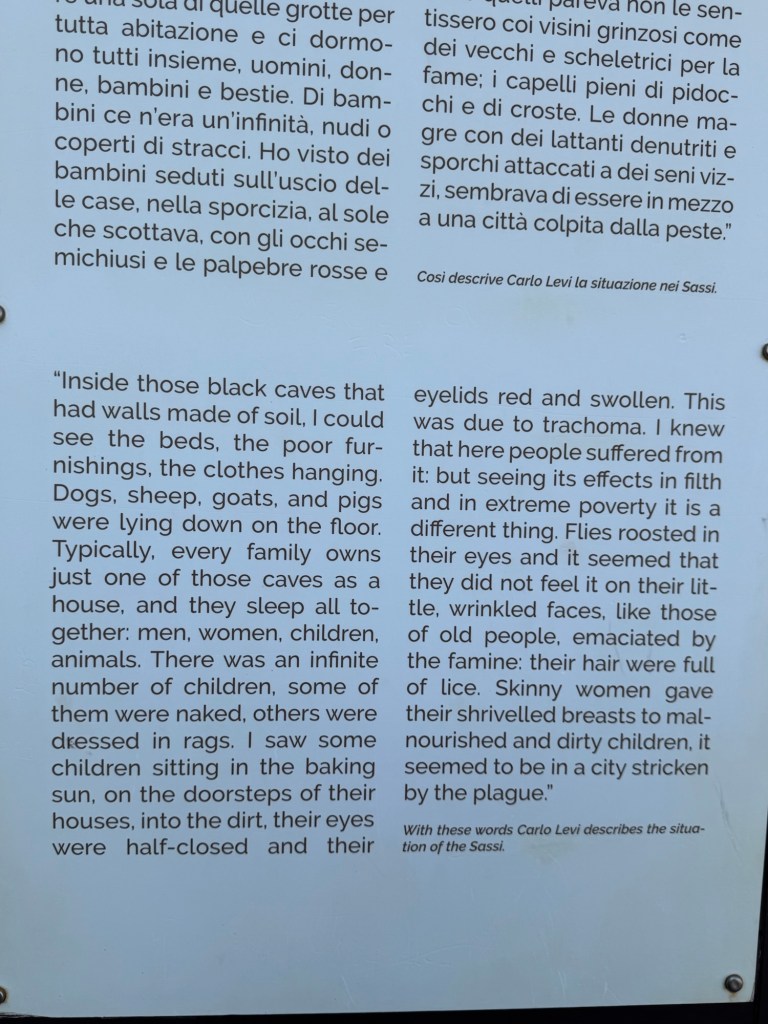
He has recently come back to the area to prepare for The Passion of Christ ll.
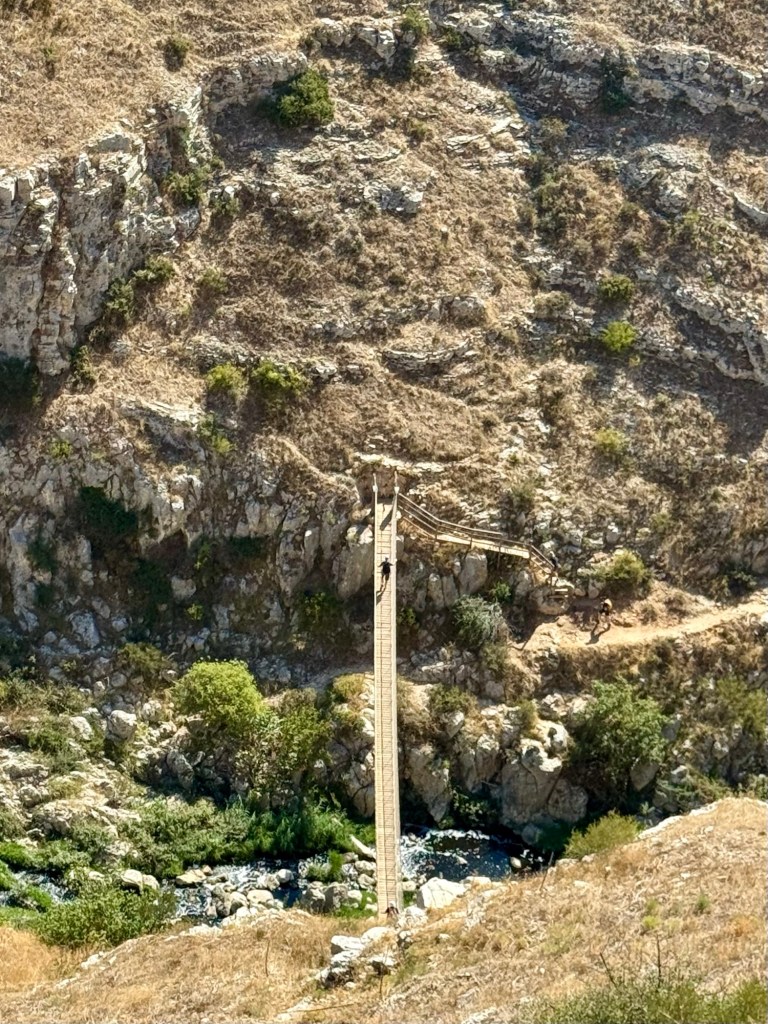
The selected region shows the Tibetan Bridge (Ponte Tibetano) suspended over the Gravina Canyon in Matera, Basilicata, Italy.
Ponte Tibetano is located in the Murgia Materana Park just beneath the historic Sassi district of Matera. A pedestrian suspension bridge spanning the Gravina river gorge, connecting the ancient city side to the opposite archaeological park and cave churches.
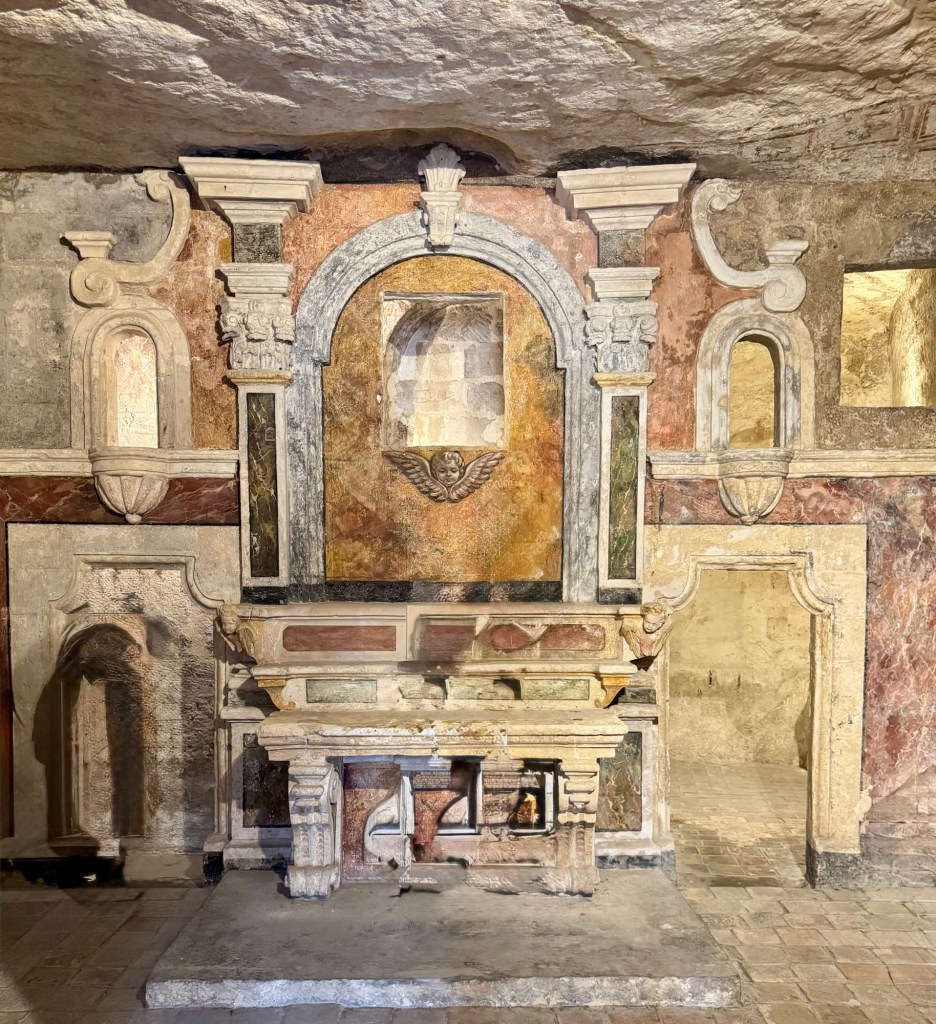
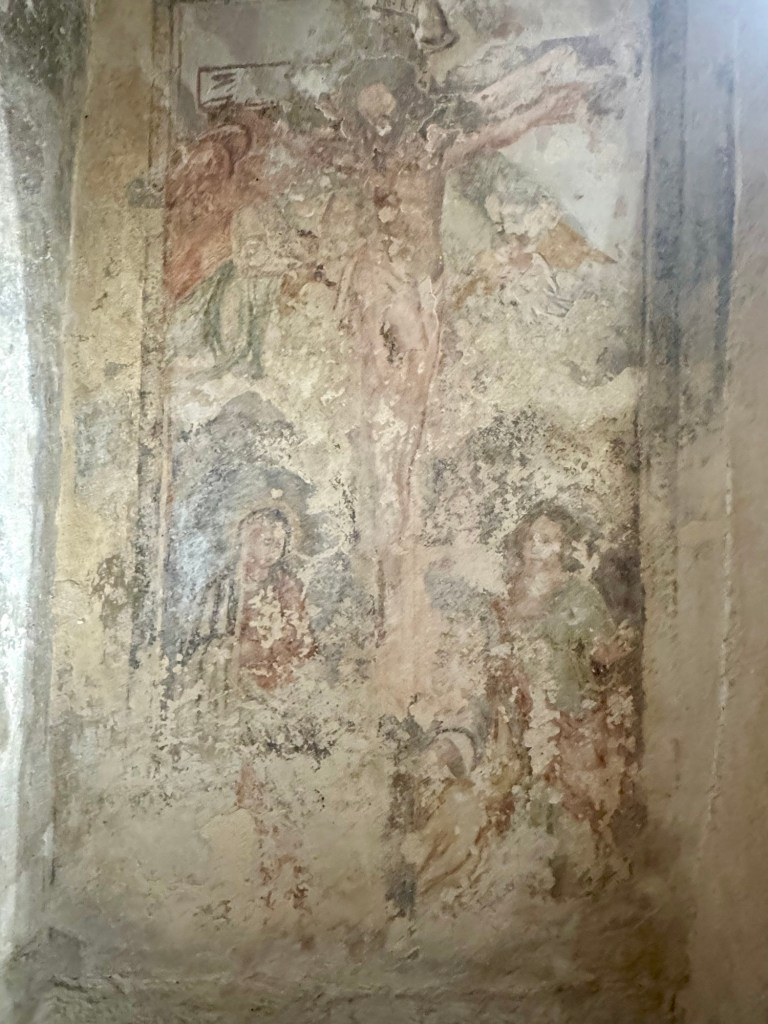
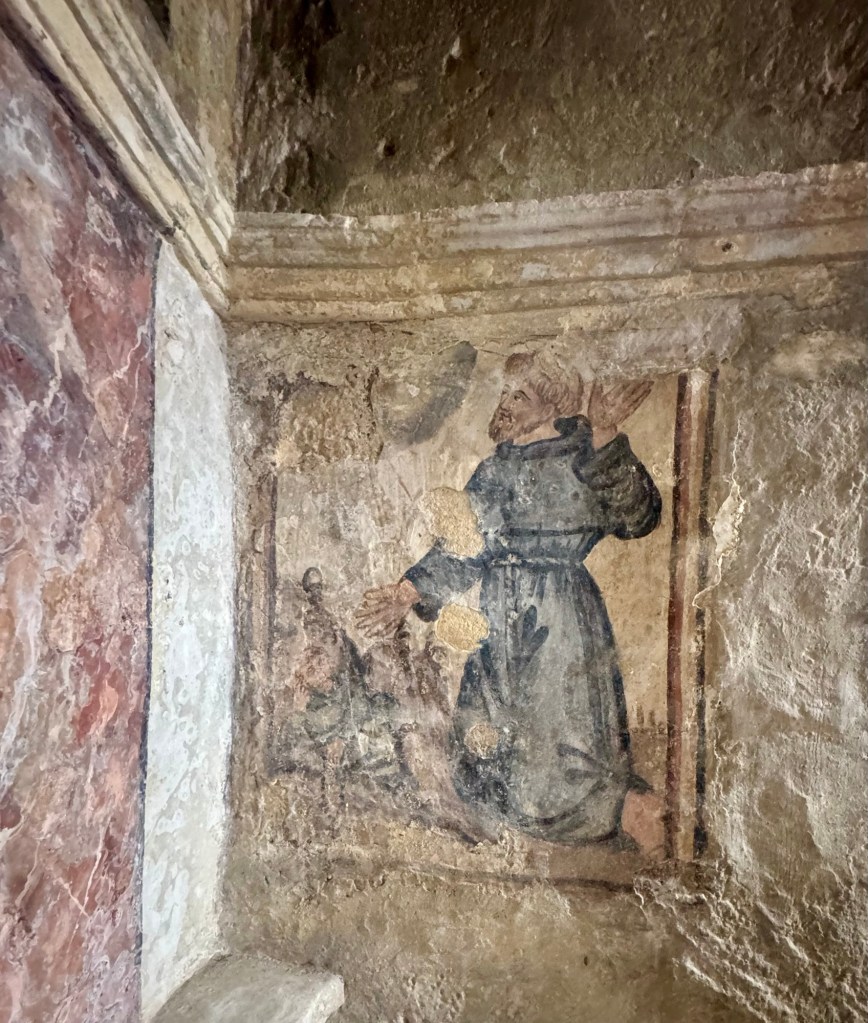
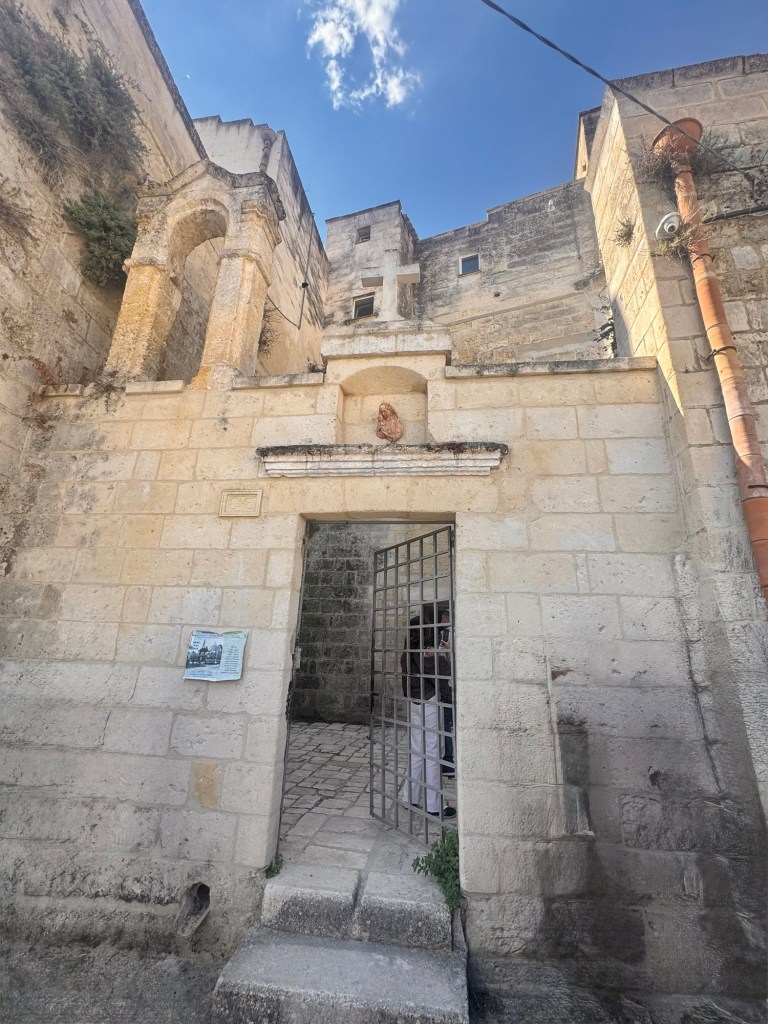
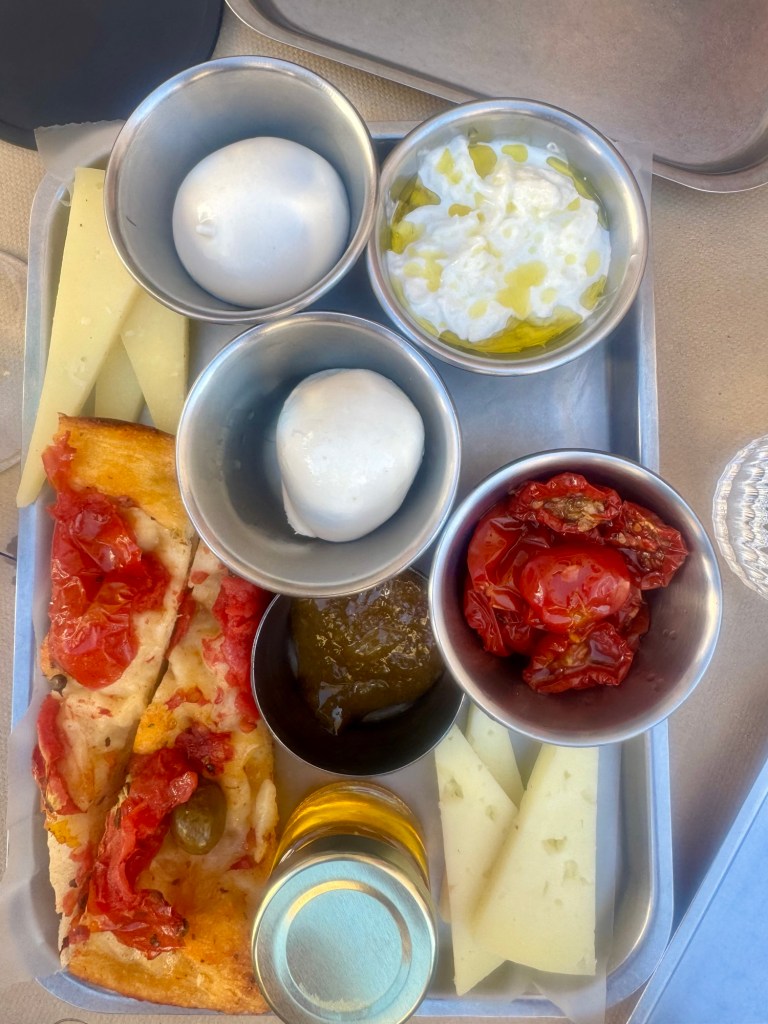
After our tour we headed back to Bari. It is very difficult to find a place to eat during the day. Just about everything shuts down for a siesta. We did find a little cafe and had lunch.
Off to the airport we went.
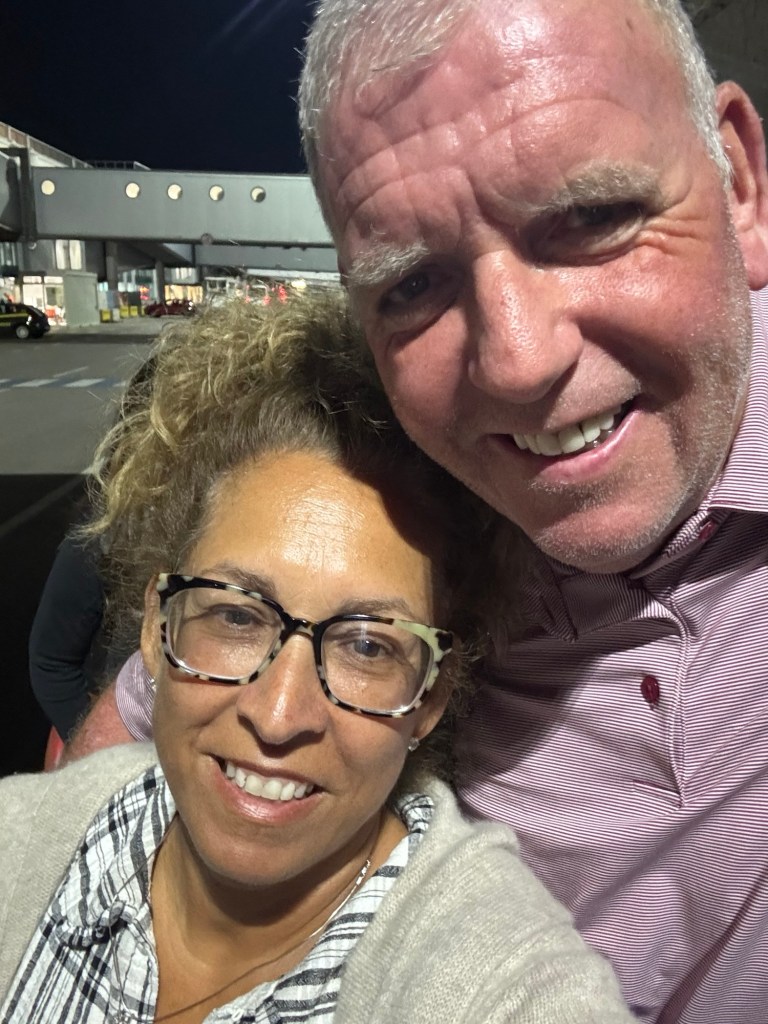
It was a wonderful experience and quite different from our previous visit to Italy.
Puglia is a rural region characterized by small towns, extensive olive groves, vineyards, and traditional dry-stone walls. We encountered some language barriers and relied frequently on Google Translate for conversations and reading menus. The local cuisine was distinct, featuring abundant seafood, focaccia, orecchiette, and iceberg lettuce rather than the arugula salads we were accustomed to. Local snacks primarily consisted of taralli, which Billy enjoyed. One of our favorite meals came from a small bakery (panettiere) where, despite the language gap, we successfully ordered exceptional pasta and fresh bread through gestures.
Driving from Bari down to Santa Maria di Leuca presented a unique adjustment. Local drivers routinely exceeded the posted speed limits, and traffic flow relied heavily on roundabouts rather than adhered-to stop signs.
Architecturally, the area offers unique sights such as the trulli houses in Alberobello, the coastal cliffs of Polignano a Mare, the whitewashed buildings of Ostuni, and the historic streets of Locorotondo, Lecce, and Monopoli, rather than ancient ruins.
While we likely will not return to this specific region, we are very grateful for the rich history, hospitality, and experiences gained during our time there.
Thank you for following us on our amazing trip.
Ciao for now and we look forward to our next adventure ❤️


Leave a comment